A chronological brain dump, with real tips and real experience
How difficult to start talking about my trip to China. There is too much to tell.
This is a chronological account of my trip in September/October 2025, with tips, advice and personal experiences mixed in between. It is literally a brain dump of China, as it came out.
If you are only interested in the operational aspects (apps, payments, transportation, etc.), below I left a list of tips that I asked GPT to extract from this same post.
If you are interested in the REAL experience, stay here.
Before starting: spoiler alert.
My experience was largely positive. I loved China, I would return a thousand times, and if you are hesitating whether to go or not, this post will probably convince you. It convinced me to read real experiences of people who went.
The initial shock: how China works
When we were planning the trip, in addition to deciding what we wanted to do, there was the whole question of how everything works there. I knew something, maybe you did too, but in case not:
In China:
- No credit cards are used → everything is paid with apps.
- The Internet is blocked by the Great Firewall: WhatsApp, Instagram, Google, Google Maps, ChatGPT, etc. do not work.
This combination means that you have to learn an entire ecosystem of applications to get around.
Surely you've heard of WeChat, the “Chinese WhatsApp”, which also serves to pay and is a social network. It's a mega app.
As tourists, you need WeChat or Alipay (Alibaba, the same as AliExpress) to pay.
I'm not going to lie: the difficulty is there. Going to China is not for everyone.
But yes:
- you get along well with technology
- you use eSIM
- you know how to investigate
- you are interested in adapting
→ you won't have problems.
China is ultra safe. With a little Creole liveliness it is almost impossible for someone to scam you on the street.
My post from here on out is 100% bullish about China, its culture, its language and its people.
Travel as a process
They say that trips are experienced in three stages:
- when you plan them
- when you travel
- when you come back and remember them
Traveling is so special that I don't understand people who say they don't like it.
That said, there are types of trips. If you are too lazy to take a long flight to lie on the beach, this trip is not for you.
China:
- many flights
- huge distances
- tired
But that tiredness is paid for every day.
Why China (and numbers $$$)
This trip was born from an idea I had years ago: someday I want to go to China.
After two years of Duolingo (spoiler: it didn't help), I started with a Chinese teacher.
With 3 months of classes and HSK 1 passed, I already felt comfortable enough to travel.
Additionally:
- Europe was very expensive
- China was similar in price
Actual comparison:
- 15 days in Italy/France, bad hotels → same price
- 18 days in China, hotels 4★ and up
Tickets:
- BCN → PEK
- HKG → BCN
- less than €600 per person
Itinerary (18 days):
- Beijing – 4 nights
- Shanghai – 3 nights
- Chongqing – 3 nights
- Guangzhou – 2 nights
- Hong Kong – 4 nights
Arrival in Beijing
Arriving at the Beijing airport already felt surreal. Leaving Barcelona El Prat, it took us 11 and a half hours to arrive. At 5:30 am, local time, we land and when you leave the manga you find yourself in a HUGE airport compared to BCN. Very high ceilings, space, everything in silence since it was very early. It was almost a religious experience. You had to go to immigration, fill out a handwritten declaration paper, and have your fingerprints and photos taken. Although we didn't need a visa to go (Argentina and Portugal, at least until 12/31/2025, do not need a visa for 30 days of tourism), I was nervous. I always get nervous when entering a foreign country. All hopes, dreams and plans are one stamp away from beginning to be lived. Finally they sealed me and I was inside. After taking an internal train from the airport to where the luggage was collected, our suitcases appeared and we left the passenger area towards the arrivals lobby.
First reality shock
Is this perhaps that secret country, to which not many people travel, so restricted? Why do I say it? Because when I left there was a huge advertisement for Cadillac (an American brand), a giant Starbucks and a Lawson (Japanese konbini chain), where I bought a Pepsi to test my Alipay. Everything perfect. In my basic Chinese, I asked the Lawson's cashier where there was an ATM and went to withdraw money. Cash is difficult to use in China, but it is worth having it just in case; That's what everyone on Reddit says.
Reddit was key to this journey. On Reddit there are real experiences from real people who tell the story about many things: from which eSIM to buy to information on how to go to the Chinese Wall. Then more on this:
https://www.reddit.com/r/travelchina/
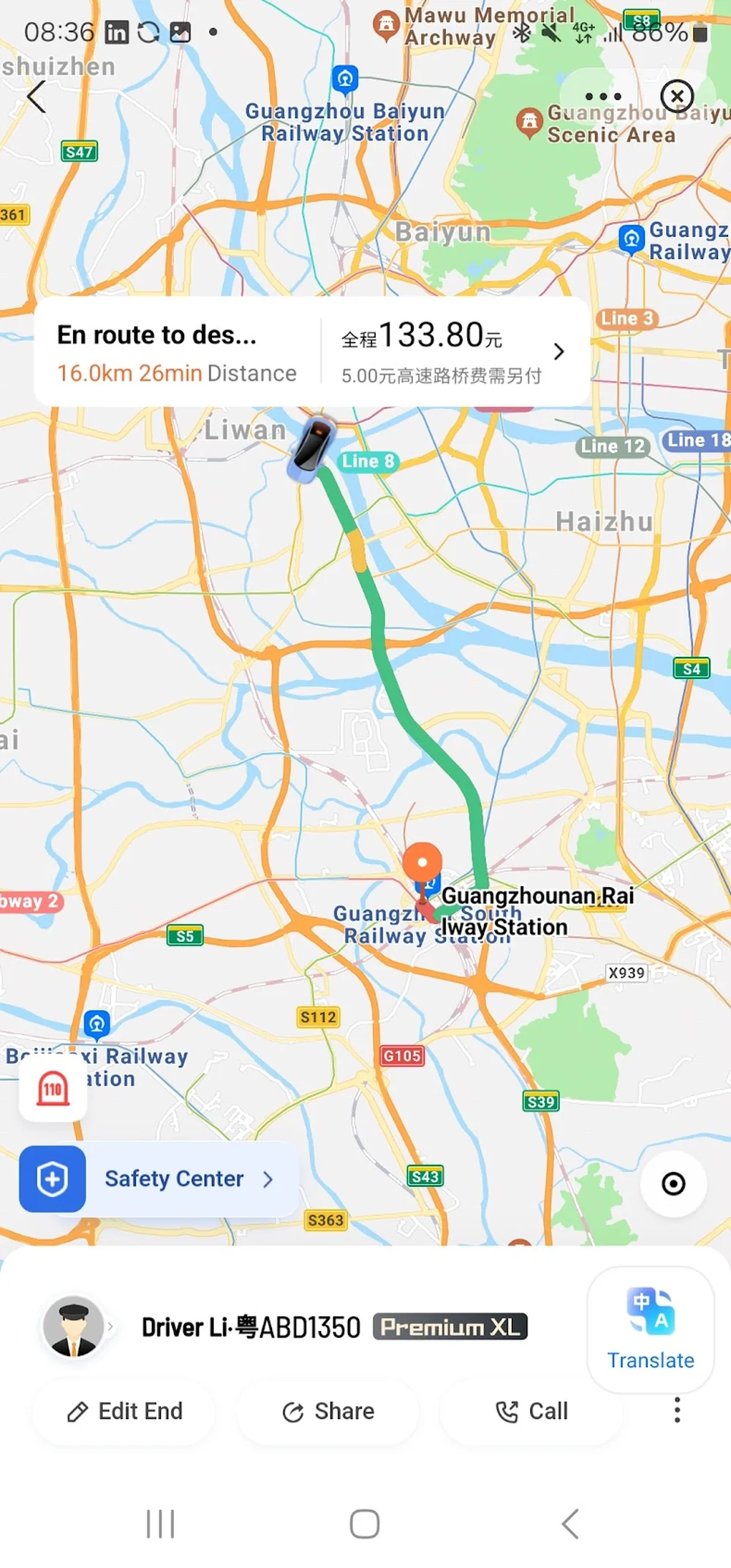
Transportation: Didi
Didi is the Chinese Uber, basically. It was far away. At the airport the signs say E-Hailing; I don't know what it means, I never read it like that in English. But essentially I deduced that they are referring to transportation apps and, when we arrive, Didi is practically the only one.
Arriving at where the Didis pick you up, I took out my phone and entered the Didi app to order one. Two Chinese people approached me and asked me: “Do you need a taxi? Do you want Didi?” All in English. I know I have to order it from the app; Anything unofficial is going to piss me off. So I made a gesture to them as if to say that I was going to order it from the app.
They stood side by side to look at the screen and made comments to each other. I don't know exactly what they were saying, but to throw them off I spoke to them in Chinese. My accent is very fresh. I told them that I was going to use my phone to order the taxi, that we were Argentine, and I asked them if they knew Argentina (it is said Āgēntíng, in pinyin: āgēntíng). Indeed, they were confused and they answered that they did know: Messi comes out first, it's called MESHI there, haha.
But anyway, the taxi finally arrived, which was quite a problem finding because there were two places to take the Didi and the guy was on the other side, but no bad vibes. We got on and went straight to the center of Beijing, to the Dongcheng district, where we were staying. This is near Gugong (Forbidden City). From the little I could see via satellite and Amap, there were several things and the area looked good, and so it was.
Taxi finally found → 1 hour to Dongcheng.
Price: ~15 USD.
First sensations of Beijing
The trip to the hotel, which will have been an hour by car, is always like an adjustment period. You start to see Chinese license plates on cars, you start to realize what the streets are like, that they are different, and you see buildings that don't look like anything you've ever seen before. As an architect I always look at those things, but anyone who likes architecture realizes that they are different. It seemed very green to me. Although it is noticeable that there is traffic and pollution, there was a lot of greenery until we got to the hotel, all around the highways. And all the streets, pristine and perfect, on what was the way to the hotel.
Later we would find cruder parts, but for now everything is impeccable.
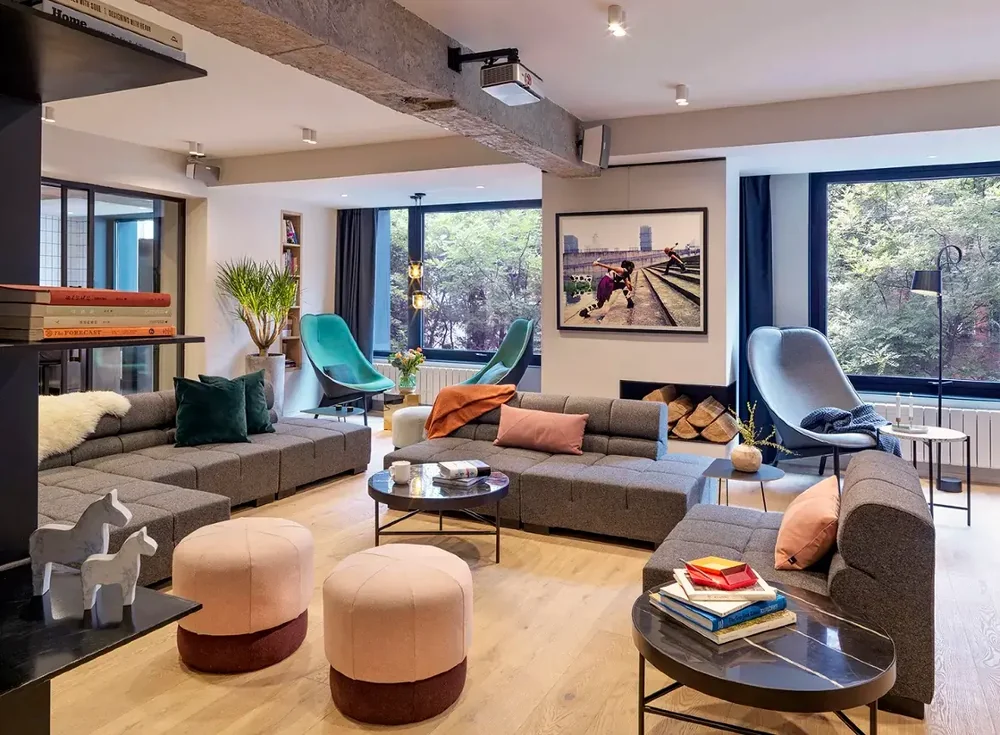
We arrived at the hotel; What we got was like a kind of little apartment. Although we weren't going to cook, obviously, it was very comfortable and with plenty of space. The girl at the reception had spectacular English, my rustic Chinese was not needed. It being the first day, and almost at noon, we decided to go for a walk.
Hutongs and first day
Beijing is a more traditional city compared to what would come later, at least the part where we stayed. There were no tall buildings or futuristic things. Lots of local clothing, food and fruit business. A good first approach to China.
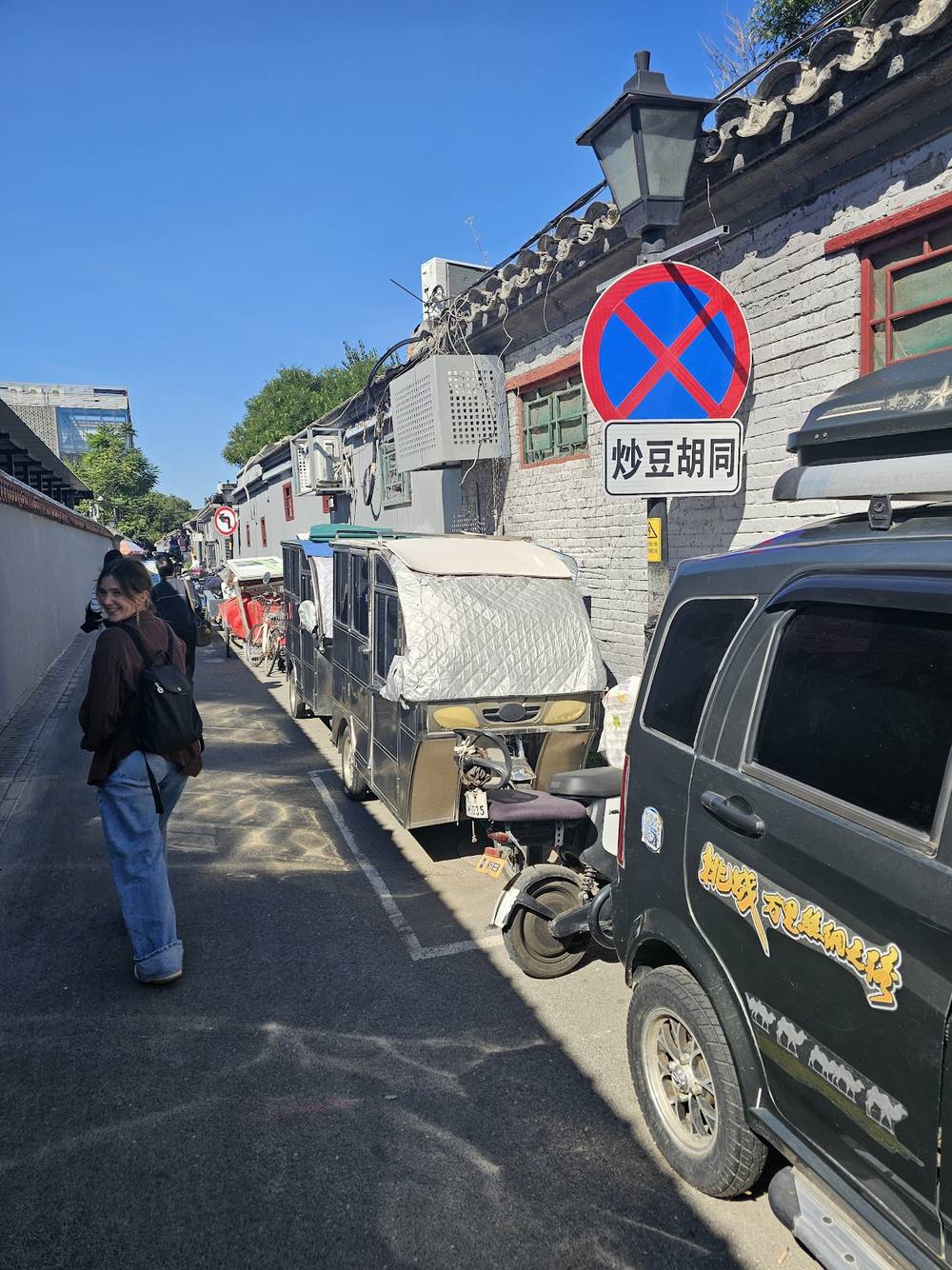
We went to walk through the hutongs, which are like little old houses. They are protected, so they can't be demolished, or at least that's what I understand. Everything super traditional. The first day we were so tired from the jetlag (it was 2 am for us and in China it was 7 am, and of course we didn't take a nap, we just kept going).
The hutongs are good: they are super touristy, but very picturesque. There are trinket shops to take as gifts, many want to sell you a tea that they give you to try, clothes, everything. It's more to look at than anything else, I would say.
Chaos, culture and clashes
Anyway, that day I remember that we had lunch at McDonald's because we couldn't think about what to eat; Please note that all signs are in Chinese. Type five we returned to the hotel, took a nap and went for a walk around the area. Nearby there was a pedestrian street with all the big brands: Apple, Huawei, Nike, Adidas, Xiaomi and even a Zara.
The prices of these things are practically the same as in Europe; Maybe the technology is a little cheaper, but that's it. What is very cheap in China is food and taxis. From the airport to the hotel, a trip that took an hour, cost I think about 15 USD.
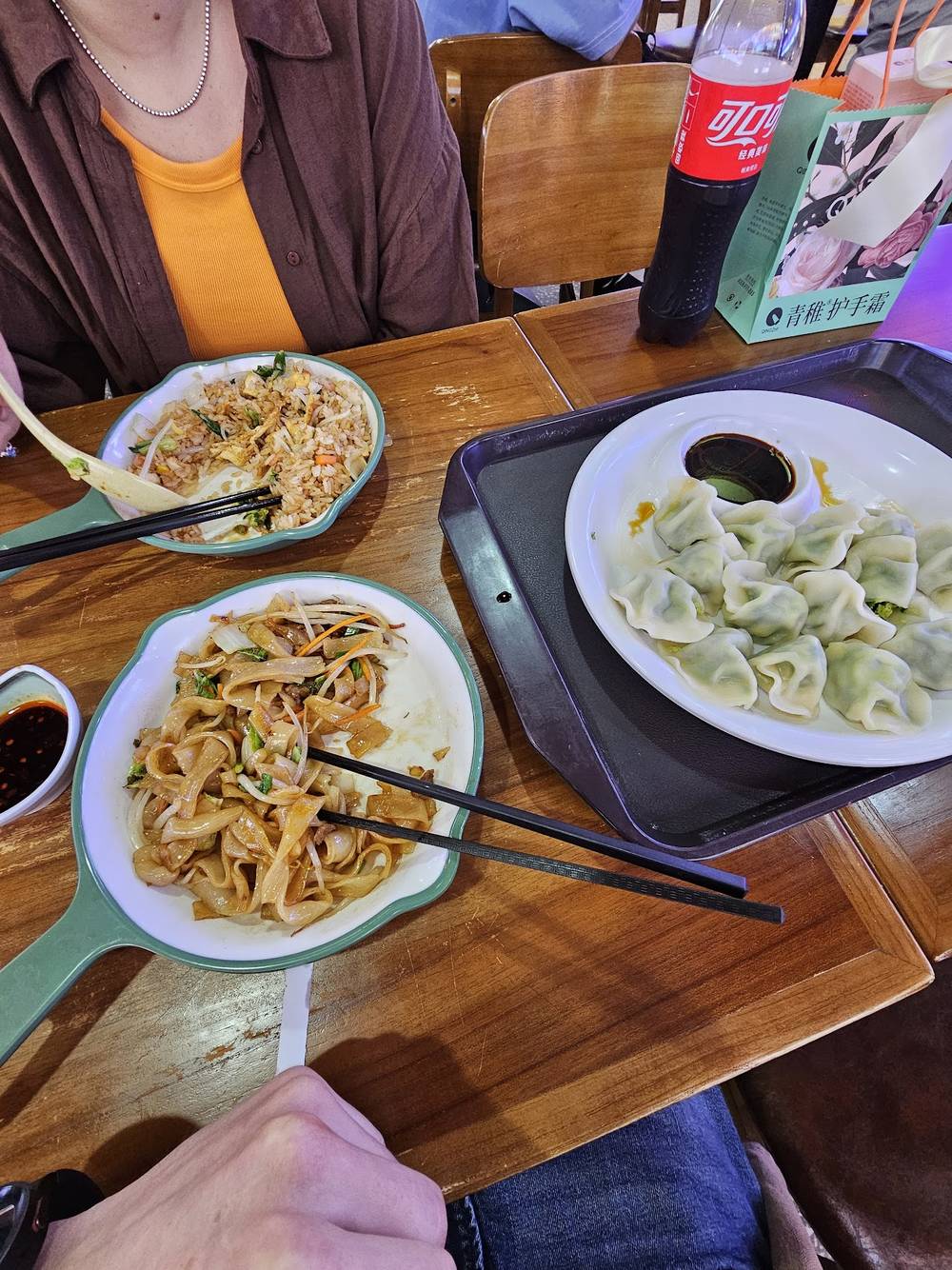
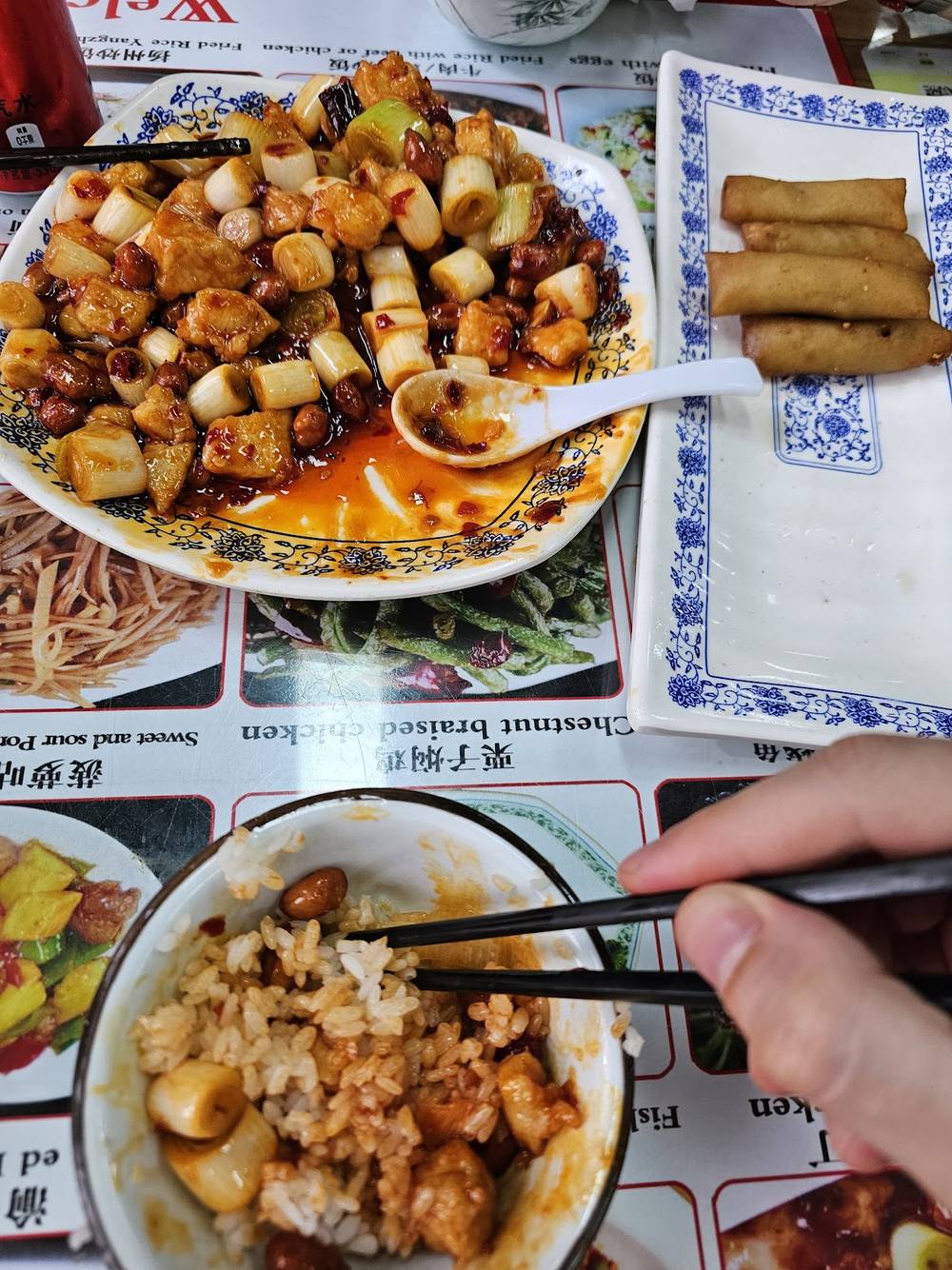
After walking around for a bit, we ate our first Chinese food, which was also fast food, and that's where the chips fell. What we are used to eating as “Chinese food” in the West is very different, nothing to do with reality, and we order the most basic thing that exists: chaofan and chaomian. The seasonings are different, the vegetables too, and even the soy.
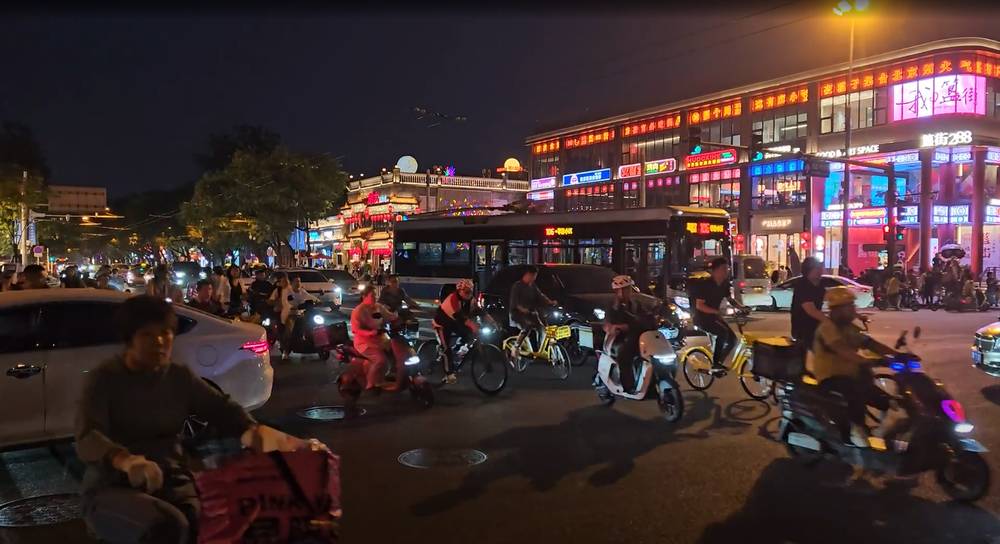
Here first the car, then the motorcycle and, lastly, the pedestrian. Be careful when crossing. Even when there are traffic lights, don't cross without looking, haha.
Another thing that may surprise you, although I already knew it was going to be like that, is the amount of spit that people say. You constantly hear how people spit, take snot from inside themselves and spread it on the street. Belching and farting too, although less frequent to hear. The smoking, the same. Many smoke, sometimes inside premises, in the bathrooms at the train station... it happens, it shocks a little.
The bathrooms, Turkish-style toilets as we call them in Argentina—or squat toilets in English—can also be a bit of a shock. Always carry paper with you, because there is none in almost any public bathroom. Another thing I carried everywhere were sanitizing wipes to wash my hands and, finally, a power bank that I bought there in China.
You need your phone for everything, so it's important not to run out of battery. And although you can rent power banks, I found it more convenient to buy one. But you have to buy it in China.
Powerbanks are well controlled on internal flights. If they don't have a stamp that says CCC, they confiscate it. If you buy somewhere official like Xiaomi, they have it and pass it safely. Also, I bought a super slim one that works really well and I used it almost every day. Between the camera, the map, paying with Alipay, using WeChat to scan menus, the translator, etc., the battery drains like water in the desert.
This brings me to the next tip: fanny pack. I hate the fanny pack, but it's needed here. You can't carry everything in your pockets, at least not in summer. With 25–30 degrees and being short, you cannot carry a phone, wallet, power bank, glasses, wet wipes and passport. Before traveling I already knew this, so I bought one that appeared on Instagram (they asked for 40 dollars); I found the same one on AliExpress for 3 dollars. I found it comfortable and as dust-free as possible.
Eating breakfast was always a challenge. The Chinese eat things for breakfast that maybe I would have for lunch: baozis, noodles, rice, soups. I don't know, I'm used to eating some fruit, toast, maybe an egg or even some chocolate cookies. A croissant on the road? Well, here we put some Chips Ahoy and some coffee or tea from 7/11.
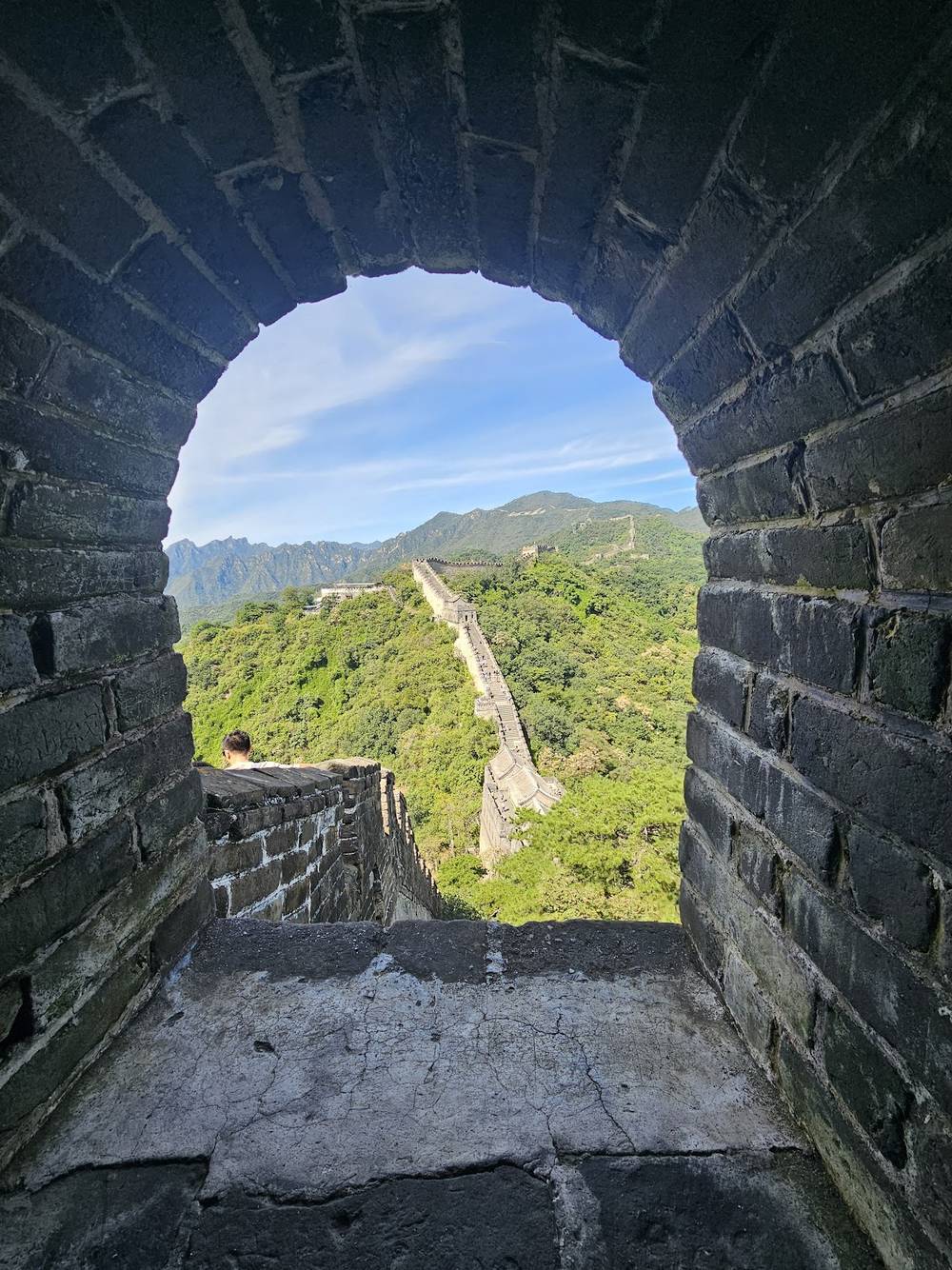
In Beijing you have Tiananmen Square, Gugong, the Chinese Wall and the Temple of Heaven as must-sees. The 798 Art District is great, but I didn't feel like it was super authentic. Last priority for that, although I still loved it.
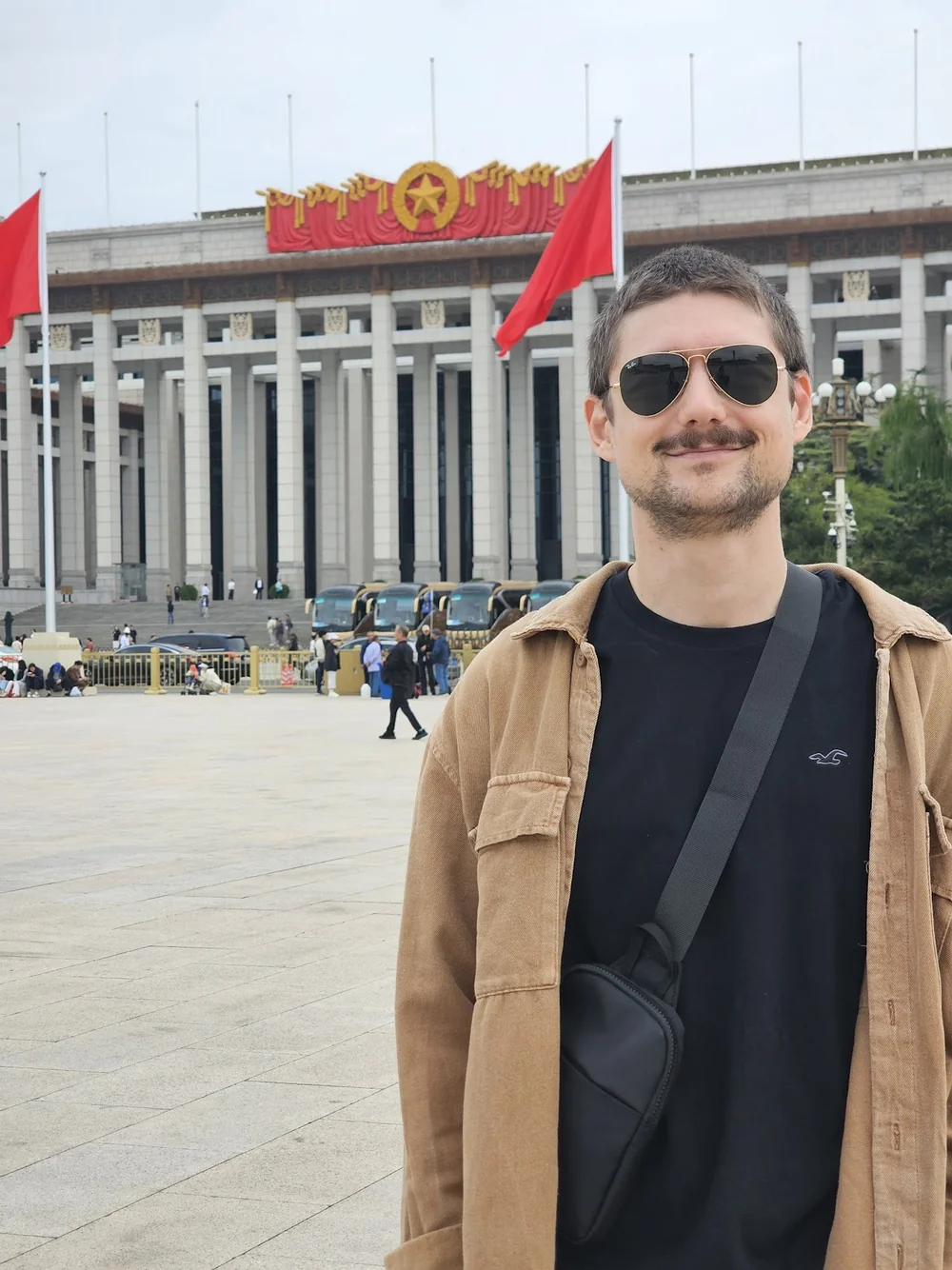
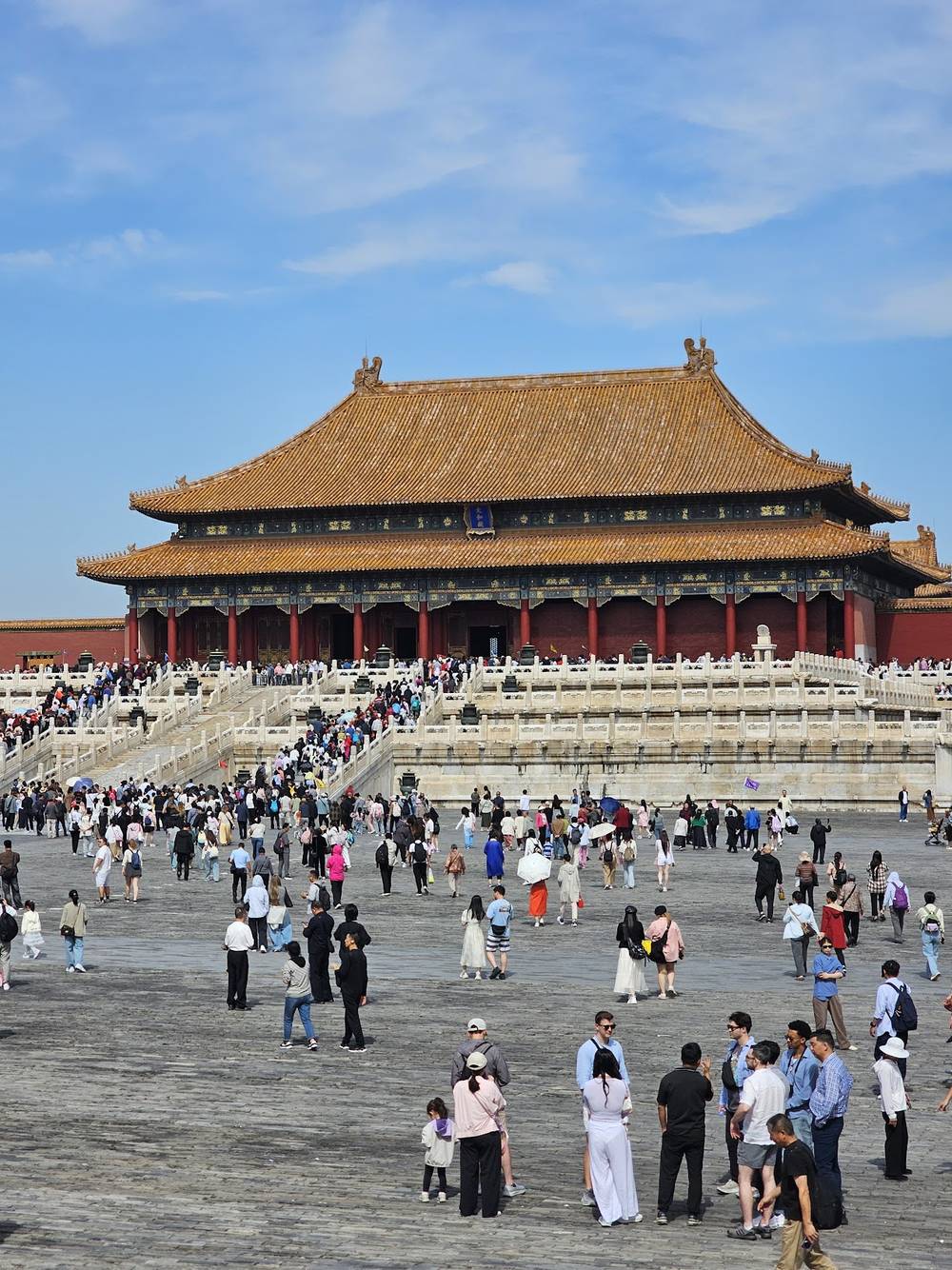
I can say that the Chinese Wall was unbeatable and that I liked the Forbidden City more than I thought I would. On the other hand, Tiananmen Square, which took hours in line, seemed worth it to me. There we crossed paths with some well-known Argentines, by chance.
Tourist Beijing (fast)
I quickly go over a few things.
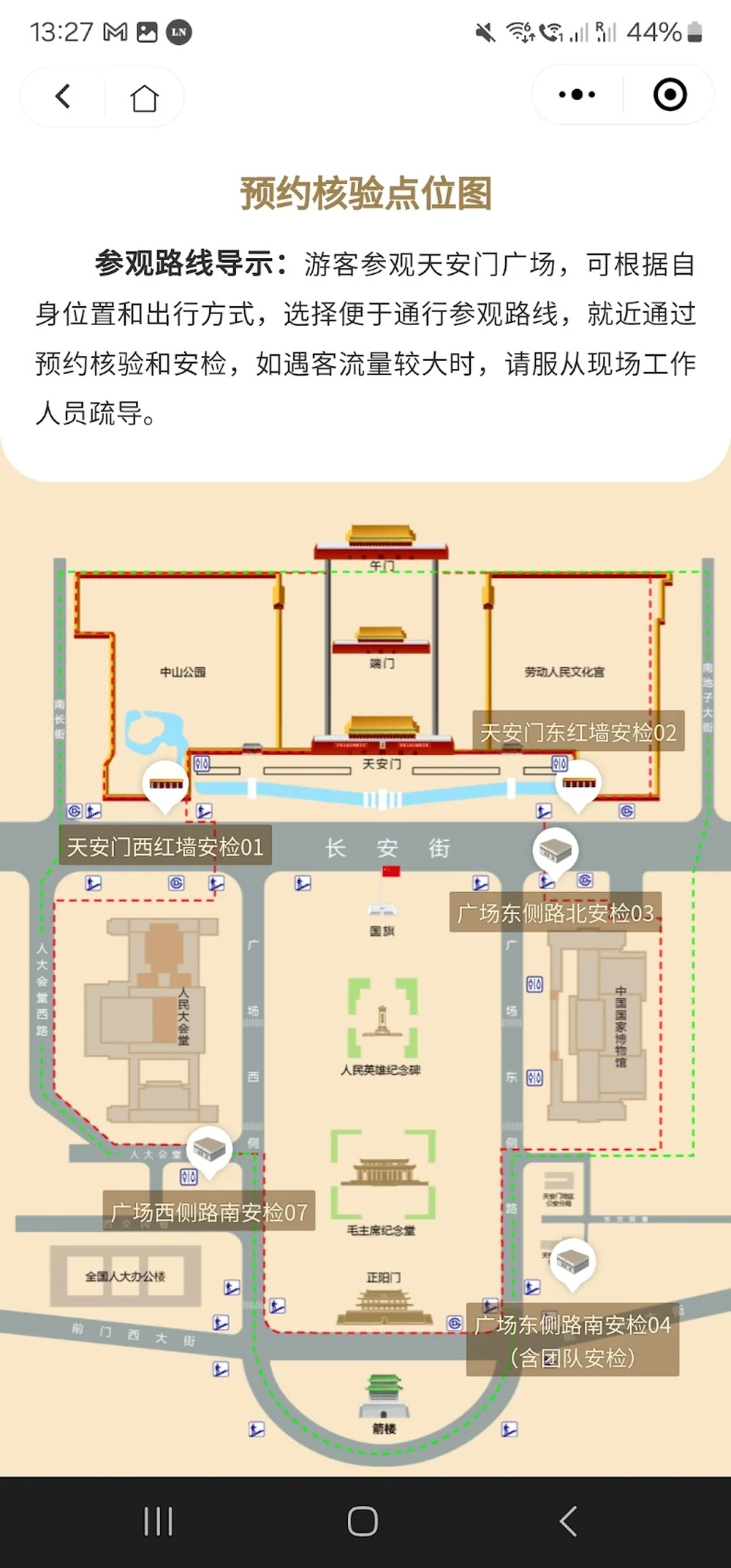
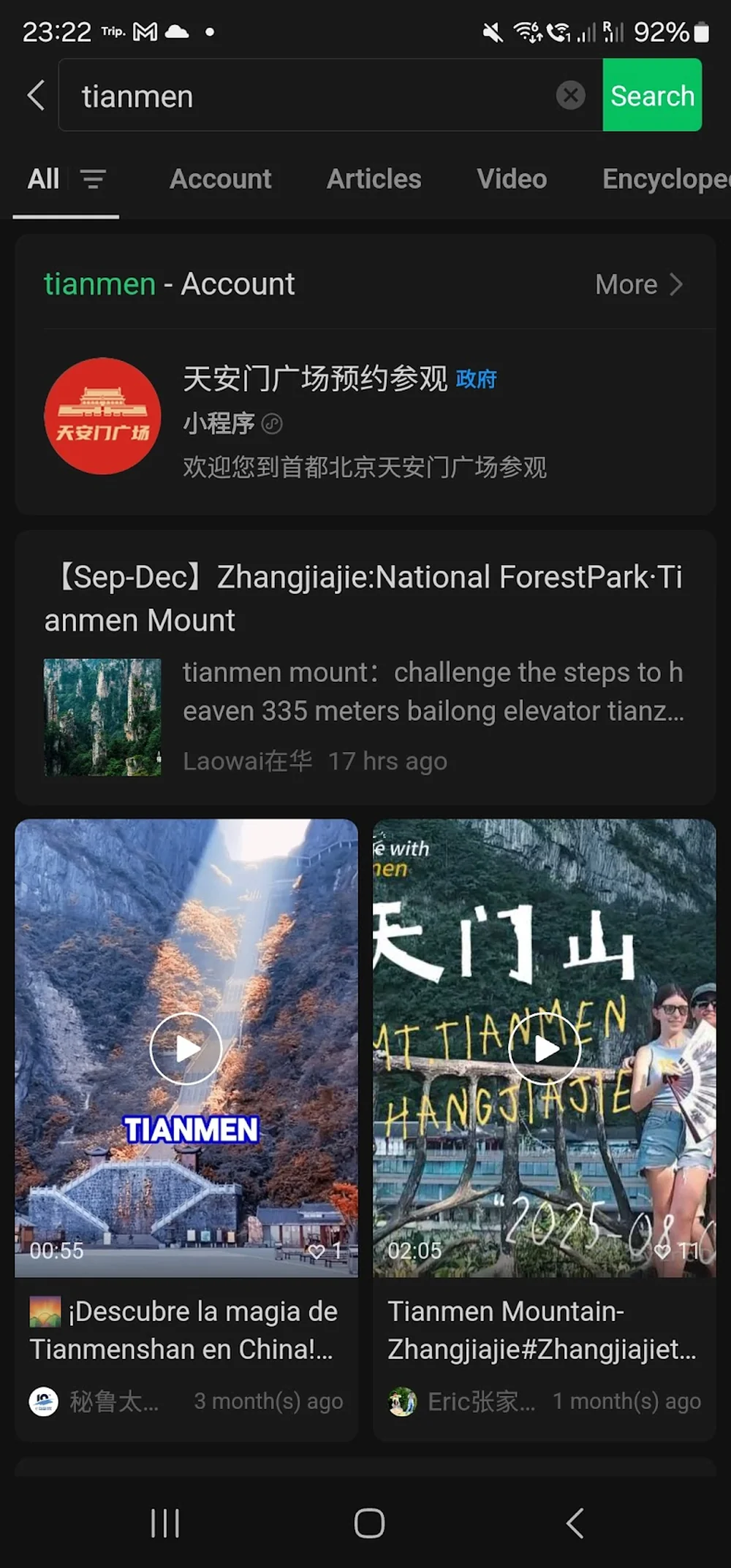
Tiananmen Square: to go you have to book a few days in advance through WeChat. It costs a little, but there is info on Reddit. You load your passports and make a reservation to enter through one of the entrances. Go early; I would say at least 30 minutes before your time. The earlier the better.
Gugong (Forbidden City): I bought the tickets through Trip.com and they worked perfectly. You just show your passport and you enter. I entered Gugong from Tiananmen Square.
The Chinese Wall: it has several parts to visit. We went to Mutianyu and did it with Busda; It cost about 40 dollars per person. It included the bondi to the Great Wall of China and entry to both sections at Mutianyu, including cable cars and chairlifts there and back.
Trains and attractions in Beijing should be taken early because they sell out. This did not happen to us later in other parts.
A tip that I read, and that was very real: take your passport everywhere. Although they never asked us out of the blue (like the police), they ask you to enter any tourist place.
Many times, instead of taking a taxi, we walked. This way we got to know not so touristy parts that were very worth it.
GEN Z LVL SUMMARY:
- Tiananmen Square → book via WeChat
- Forbidden City → Trip.com
- Chinese Wall (Mutianyu) → Busda, ~40 USD
- 798 Art District → cute, not essential
Always carry passport.
TianmenSquare x wechat:
Train to Shanghai
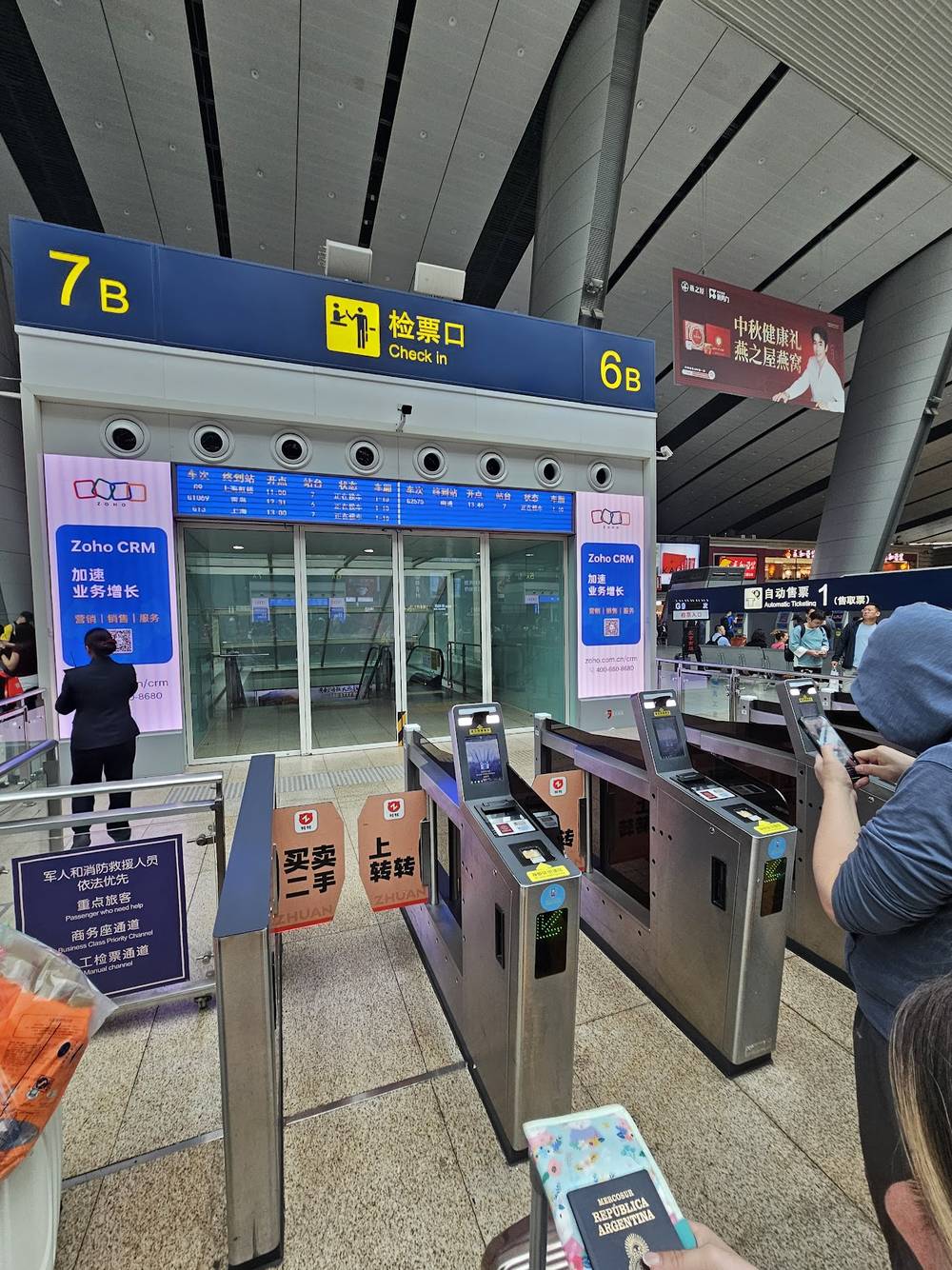
To go from Beijing to Shanghai we went by train. It wasn't difficult. We bought the ticket well in advance. On the trains you do not have a physical ticket: the system relates it to your passport, so you enter by showing only your passport.
Those of us who use a passport to travel (tourists) go through the same line as those who have priority, such as retirees, because sometimes the machines to let you onto the train only accept a Chinese resident card. On the other hand, in the retiree line there is a person with a computer who processes it manually for you.
Beijingnan station is crazy: everything impeccable, with many places to shop and eat. We boarded the train with our suitcases and arrived at Shanghai Hongqiao. One Didi later—just like at the airport, they also had designated areas for taxis—and we were already at the hotel.
GEN Z SUMMARY:
- ticket associated with the passport
- foreigners by priority row
- impeccable seasons
Shanghai
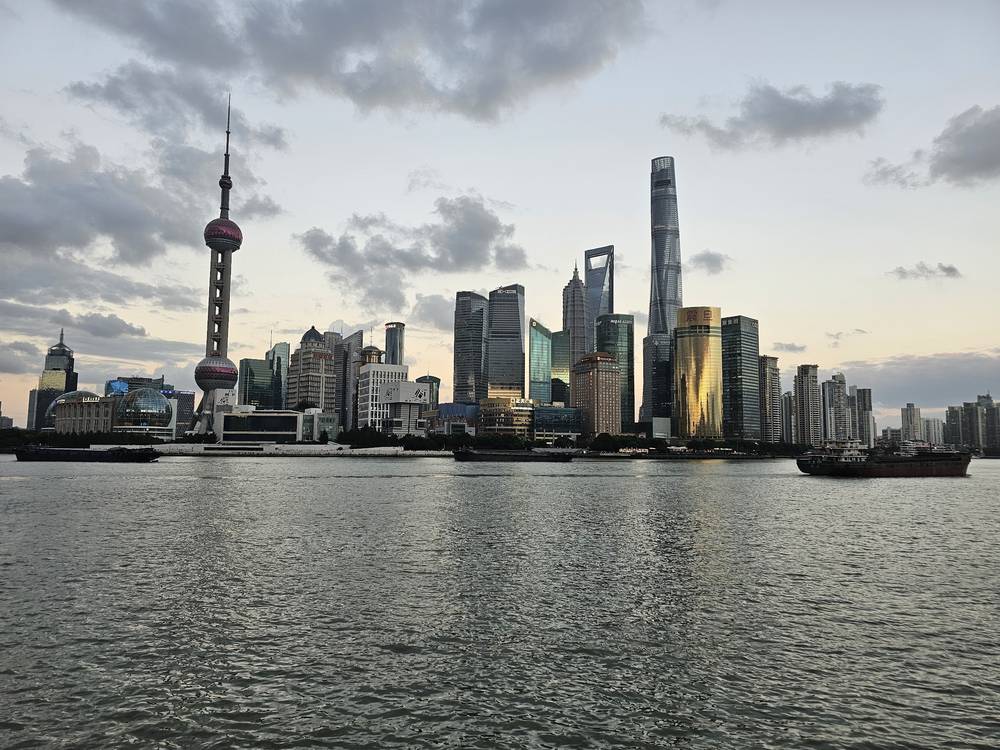
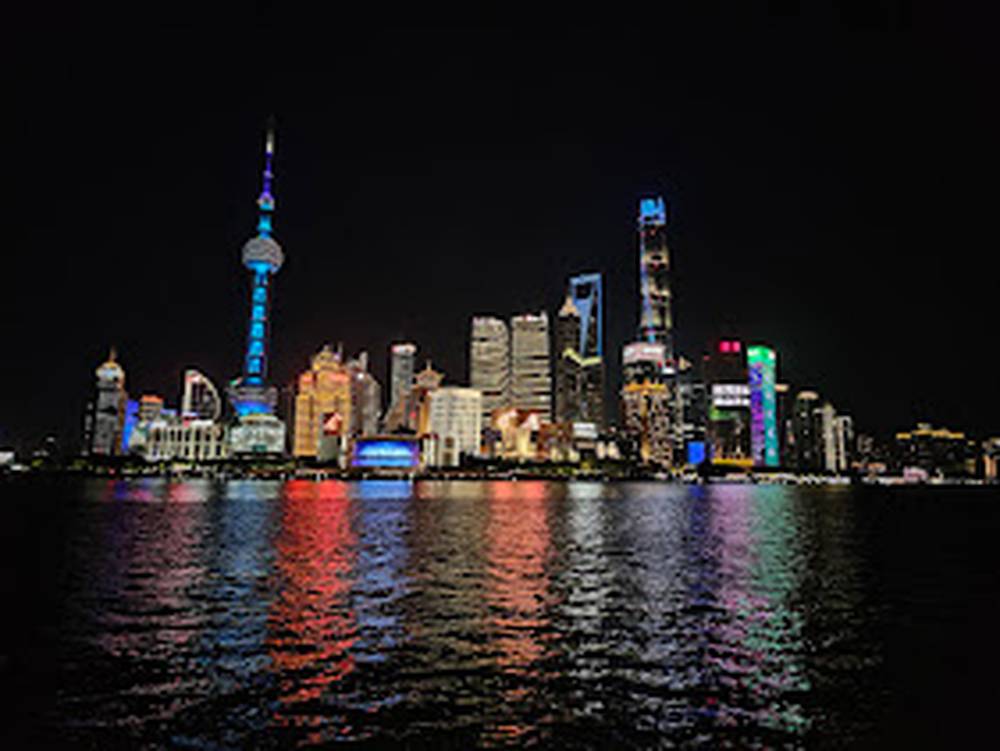
Shanghai is the perfect contrast to Beijing. The skyscrapers that you don't see in the tourist area of Beijing you see in Shanghai. The city has a unique skyline, which is also illuminated in a coordinated way at night.
And shopping here... well, if you like shopping, you're in luck. There are absolutely all the clothing brands, technology brands, whatever you can think of. The Nike store blew my mind; I think it's the best place I've ever been to. In addition to the way everything is put together being architecturally beautiful, they had everything.
We were already five days into the trip, and if we saw someone not Chinese it was strange. There is a lot of internal tourism and little foreign tourism. Although you can see that these parts are used to foreigners, in Shanghai I found that less English was spoken than what I saw in Beijing—at least that's what I experienced—when it should be the other way around. Shanghai is more cosmopolitan, there are more foreigners living there, more foreign companies based there, etc.
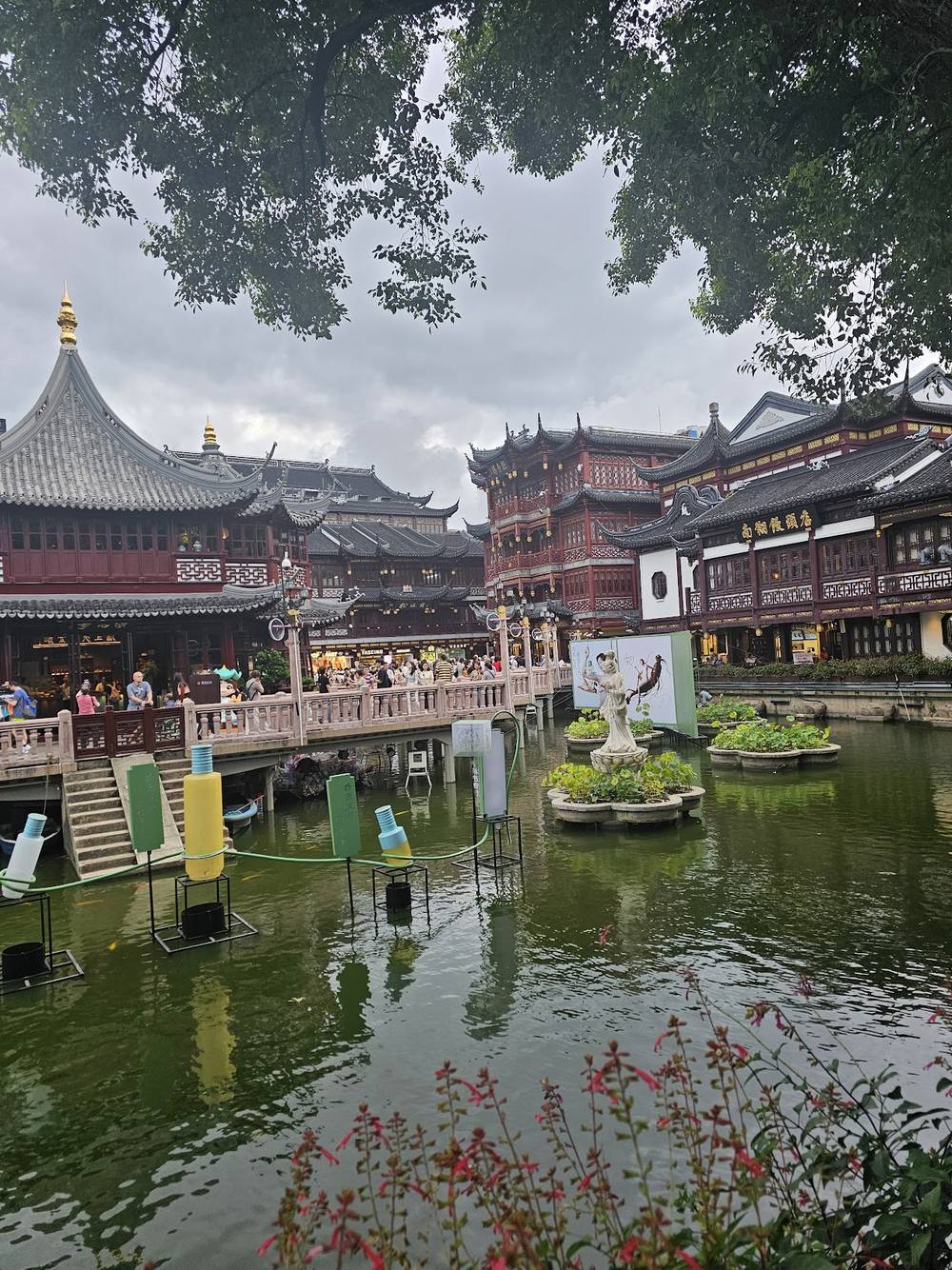
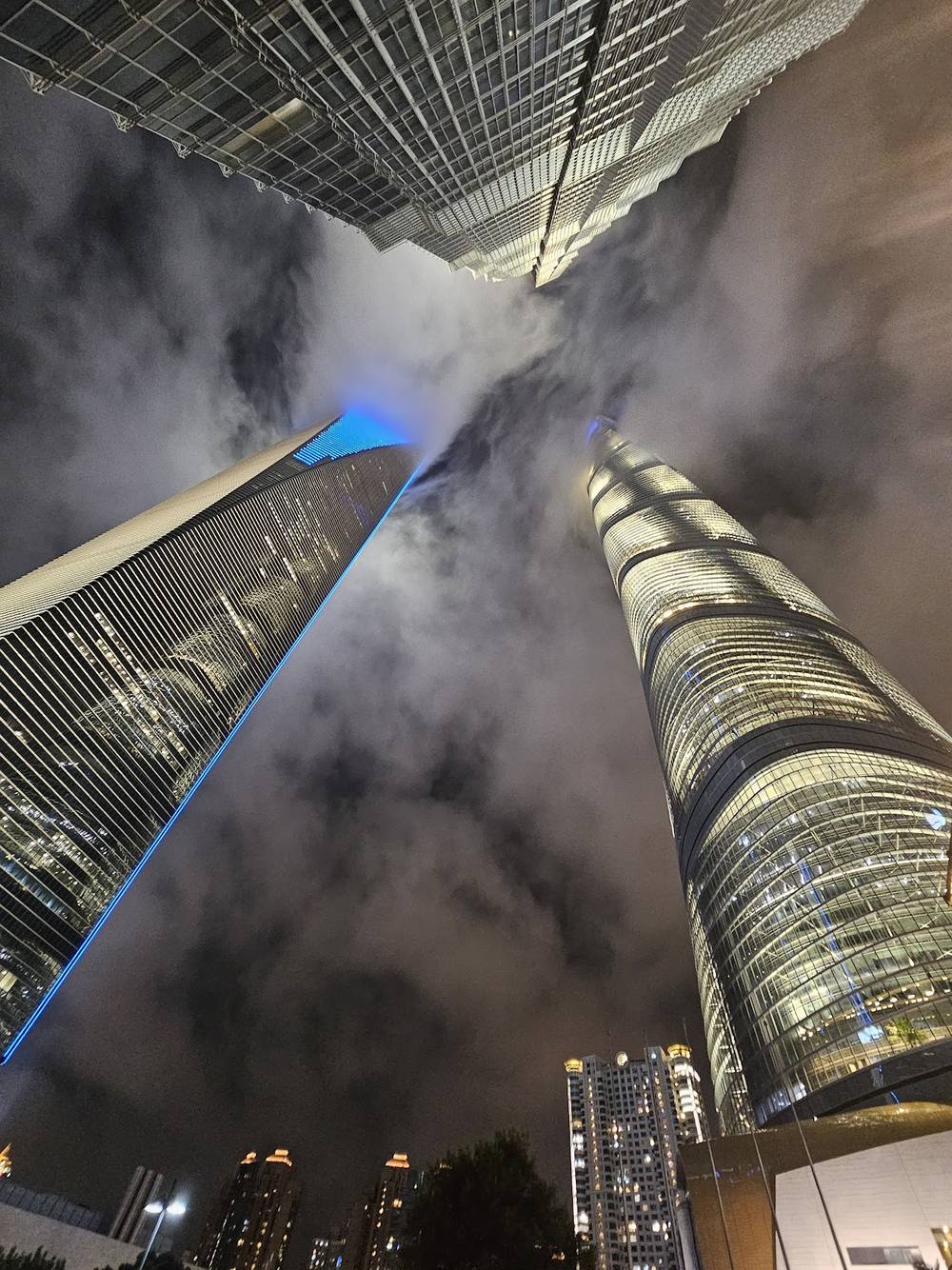
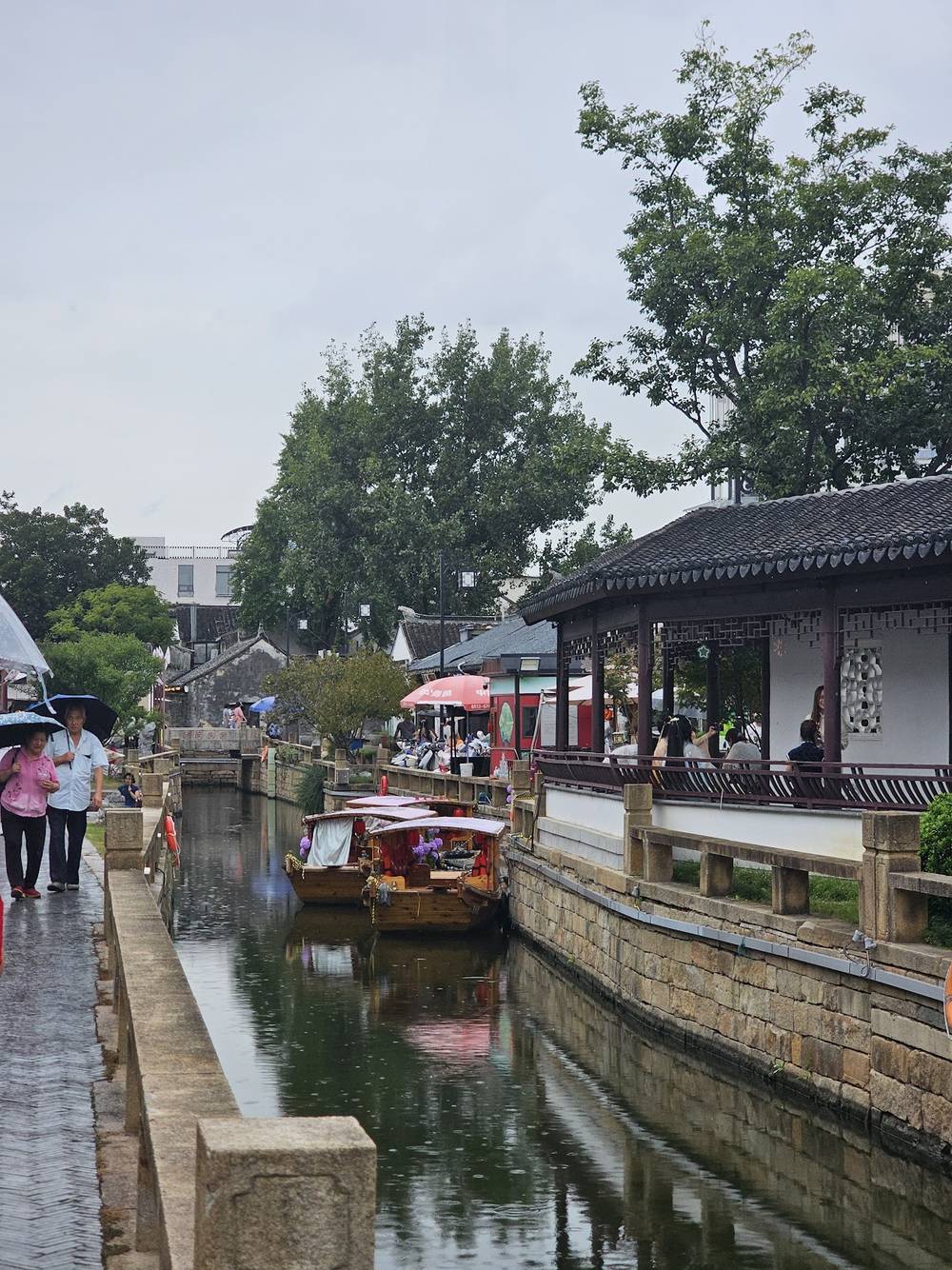
We weren't in Shanghai much: we did the typical sights of the city and on the last day we went to Suzhou, which is 30 minutes away by train. It was worth it. It reminded us a little of Kyoto in scale and feeling. It felt like a full city, but with a nice old and super picturesque center, with canals. In addition, it has the Humble Administrator's Garden, which is too beautiful.
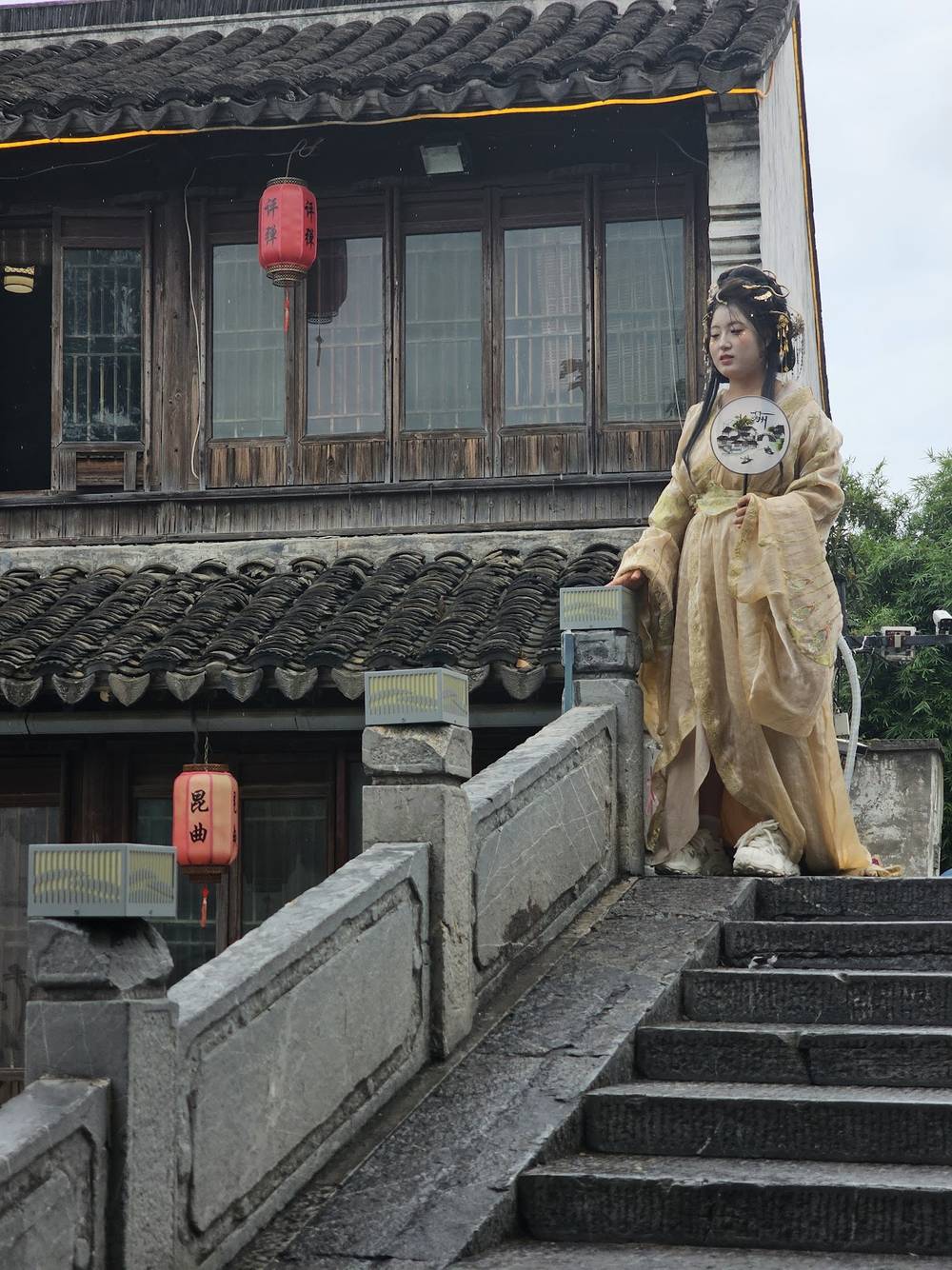
In Suzhou I also met my Chinese teacher. I saw it for the first time in person! He lives further north, but took a one-hour train ride closer to Suzhou. We spent the whole day with him and it was a unique and fun experience. It's very different to travel, at least for a day, with a local: see how he gets along with the rest, how he translated things for me that I obviously didn't understand, and even the comments that people sometimes make about you (they were all good things).
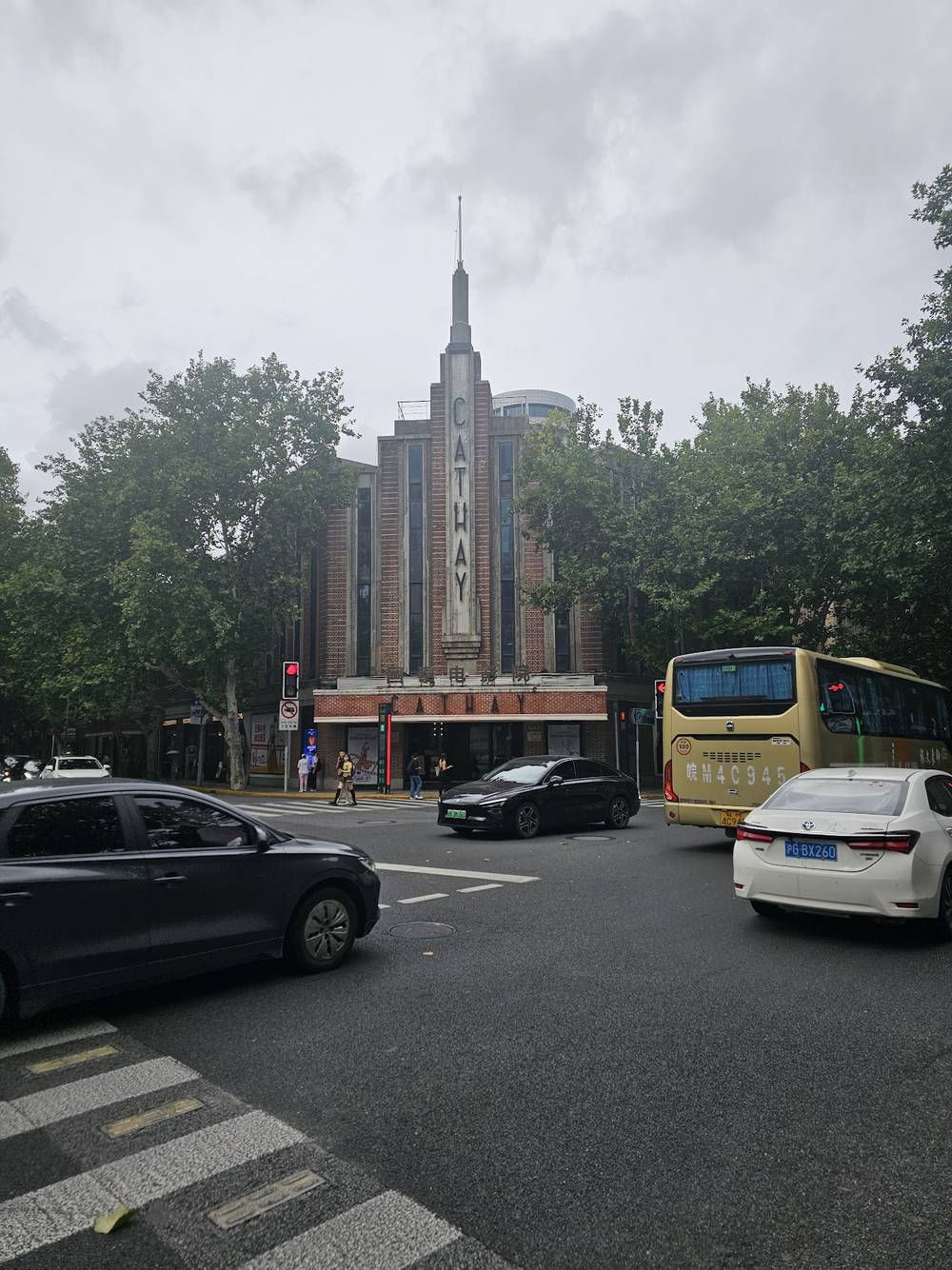
Shanghai has a bit of European architecture, from France, from the UK, it shows that there was a bit of colonialism and today it generates a very interesting contrast. There are little gems everywhere, here an art deco theater:
The next day it was time to say goodbye to Shanghai and face half of the trip, heading to one of the craziest cities there are and, perhaps, one of the most entertaining: Chongqing.
Chongqing: the top of the trip
If you haven't seen any videos of Chongqing, it would seem strange to me, because this city is completely viral. It is very worth going. It's spectacular.
It is one of, if not the largest, cities in the world.
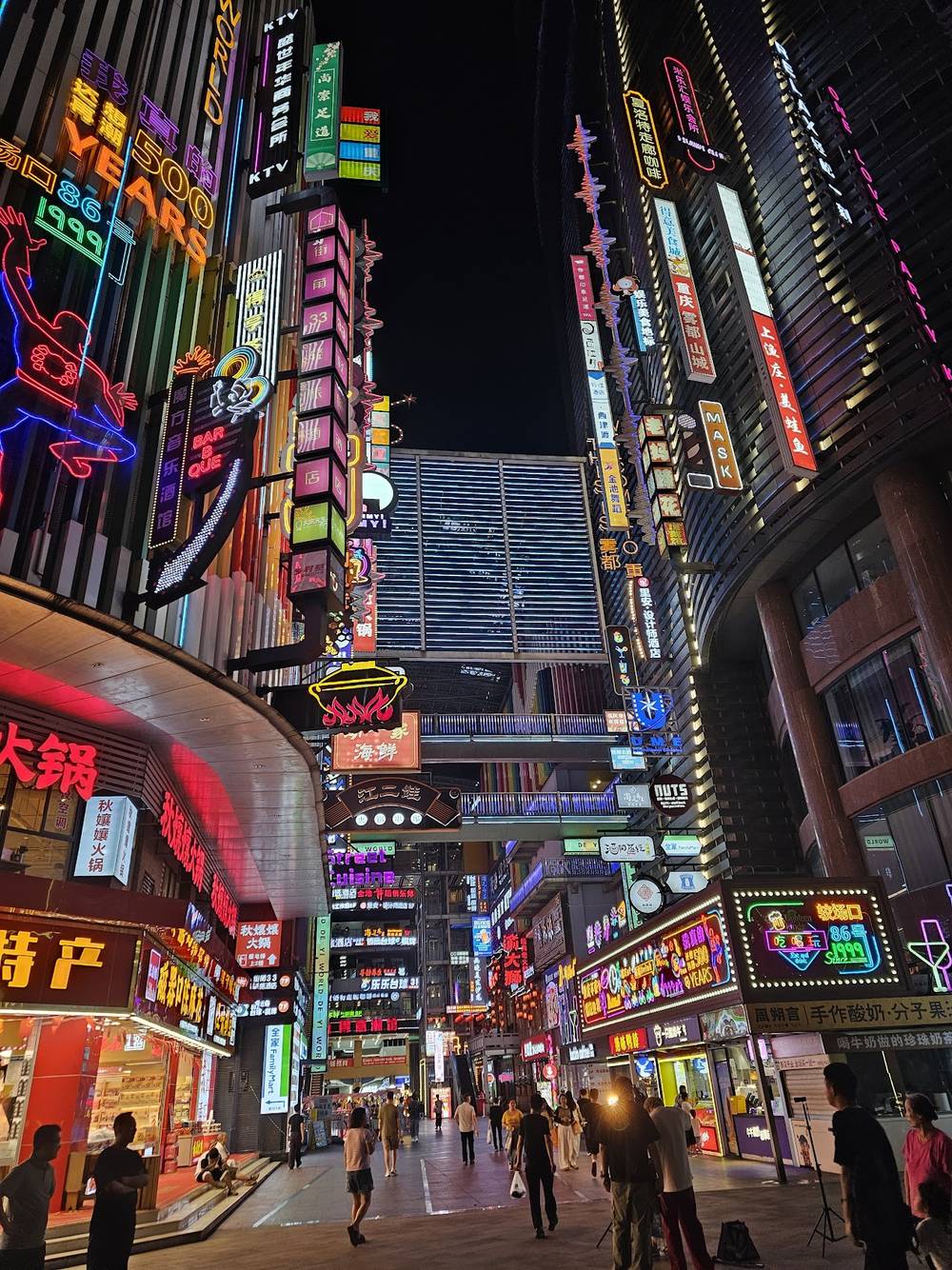
Here we pay less than $100 a night for Marriott Executive Suites: 20th floor, tremendous view, spectacular service. Well, 5 stars.
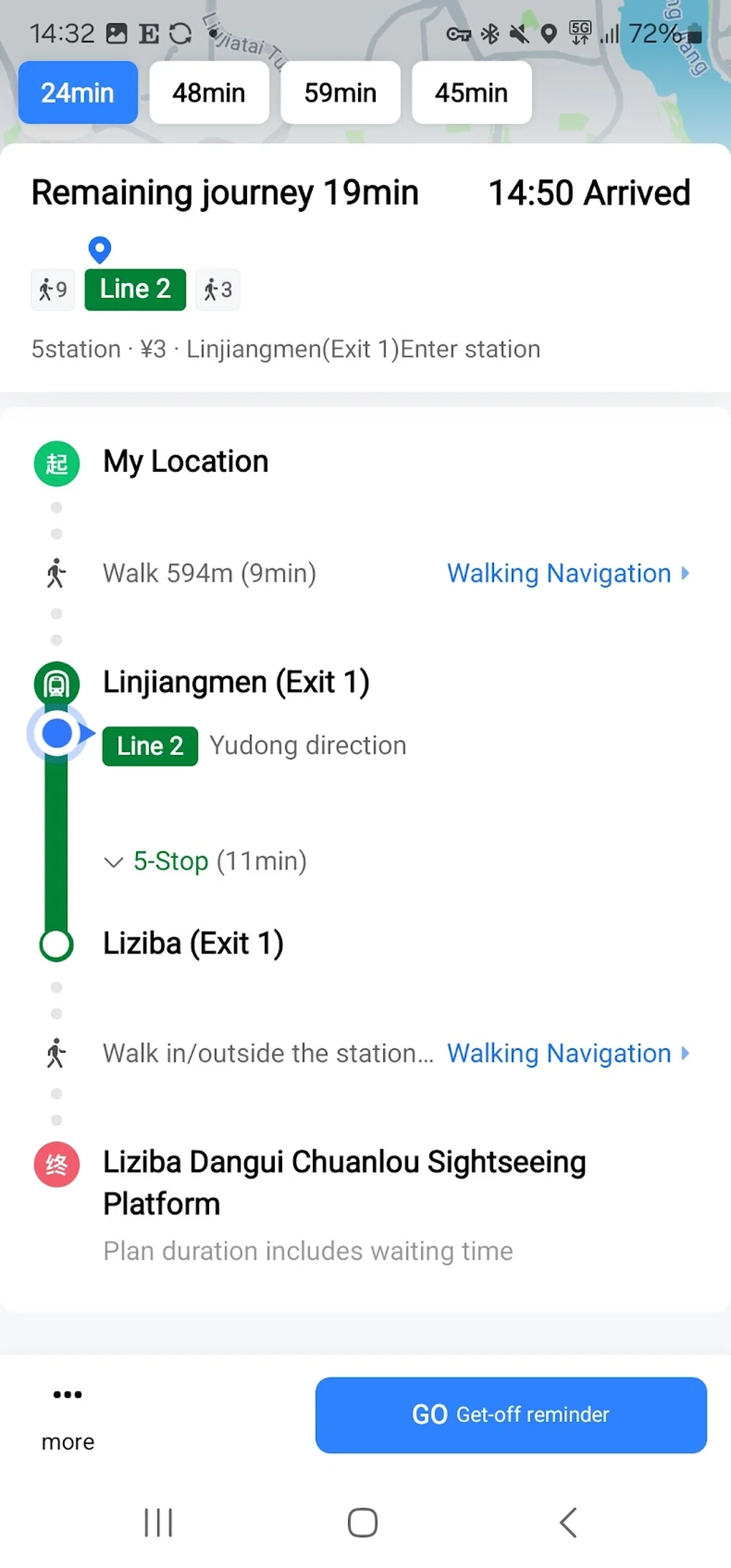
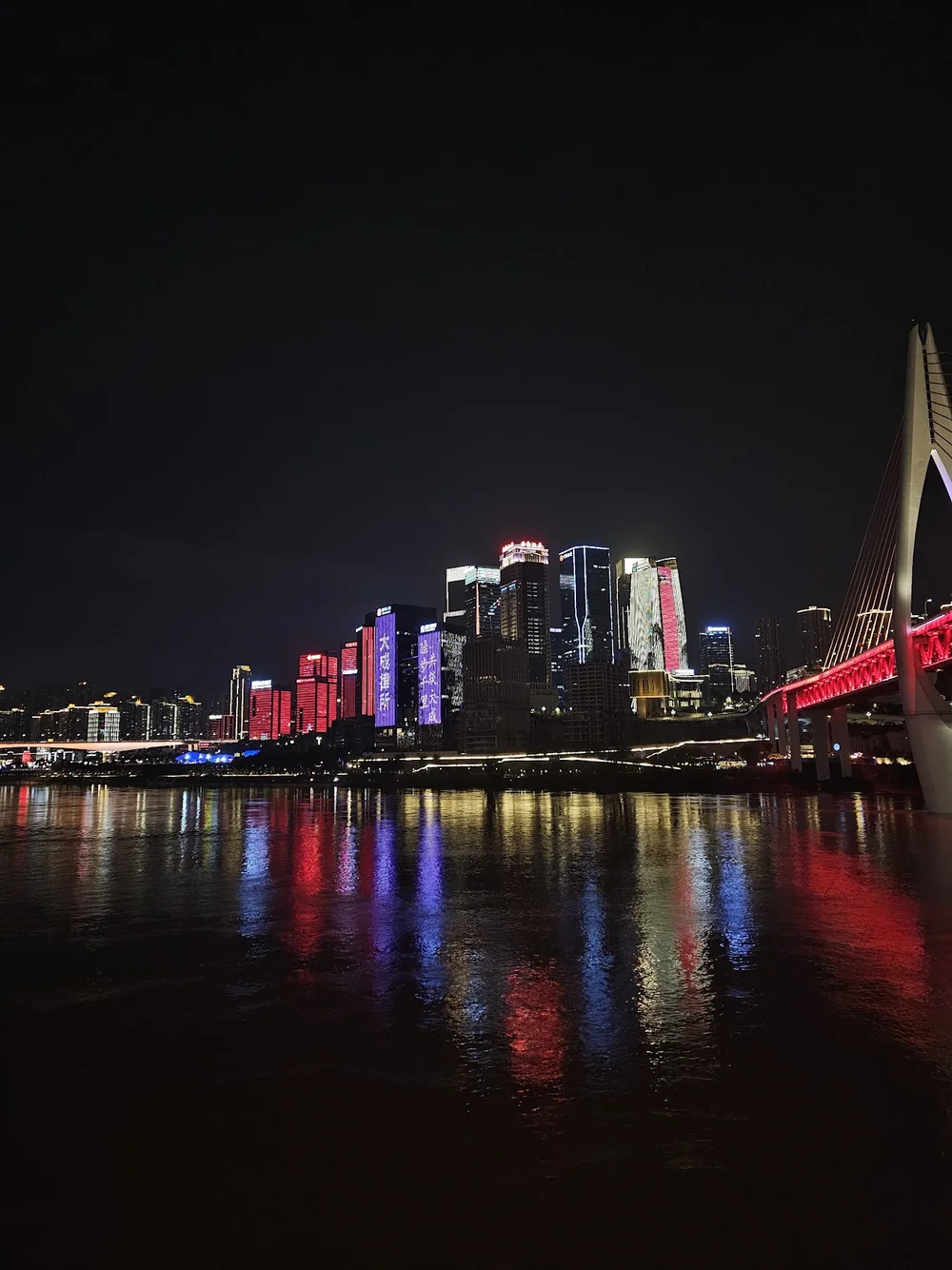
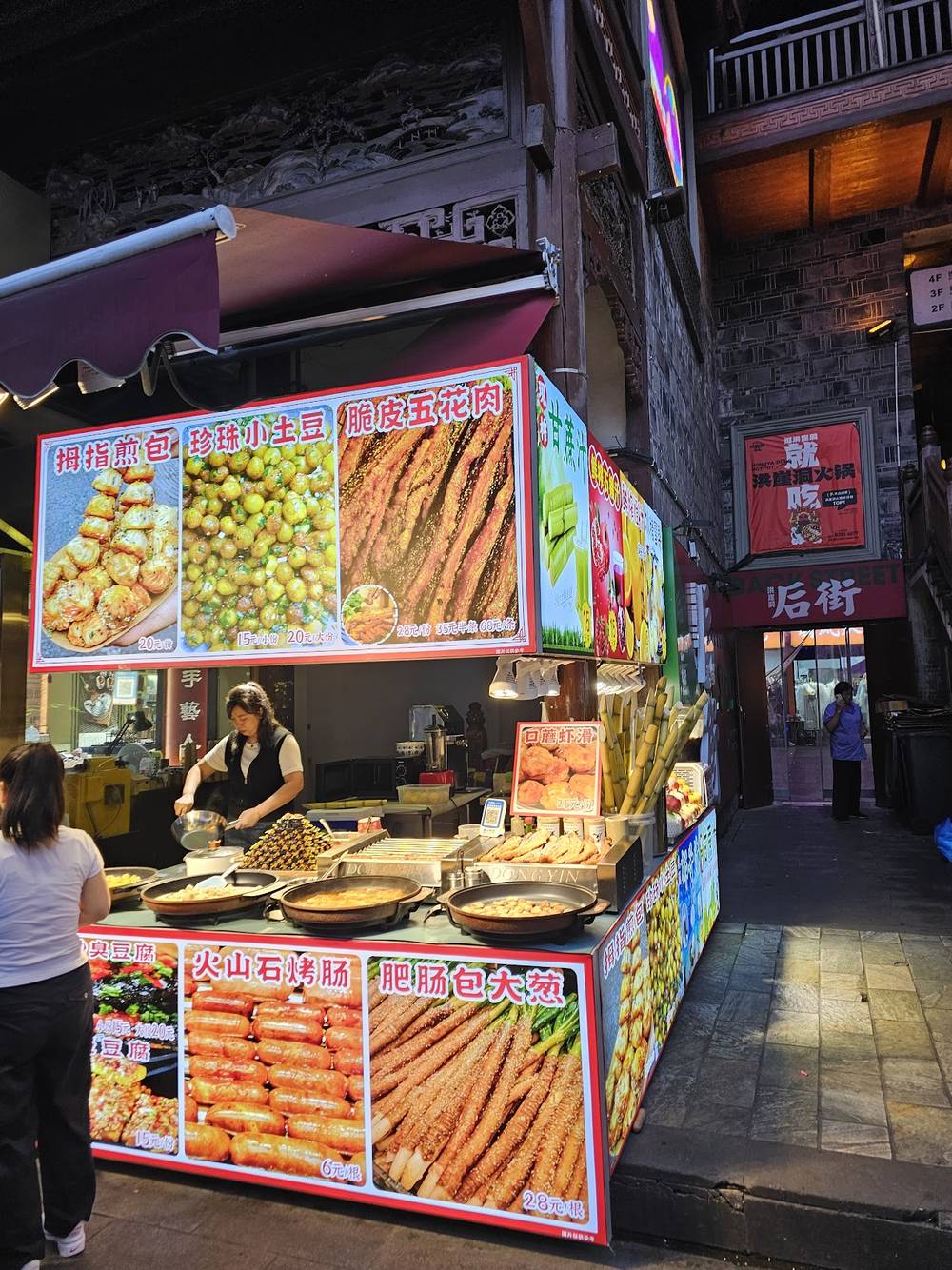
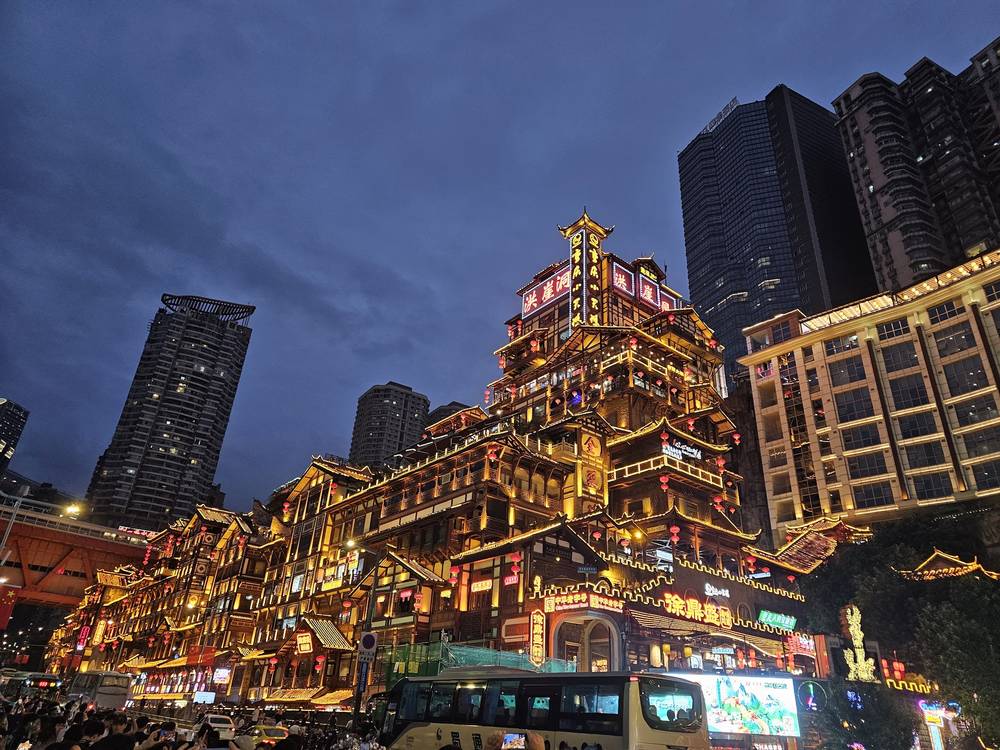
We stayed three nights. The main thing about Chongqing is its special geography, its night lights and its cuisine. It's like a city—mega city—in the middle of green mountains, with a river in the middle that turns cyberpunk at night. It is famous for spicy, ma la and hotpot. In addition to what everyone knows, there is a lot of shopping: you have all the big brands, shopping for local things and traditional mega mall-style shopping malls.
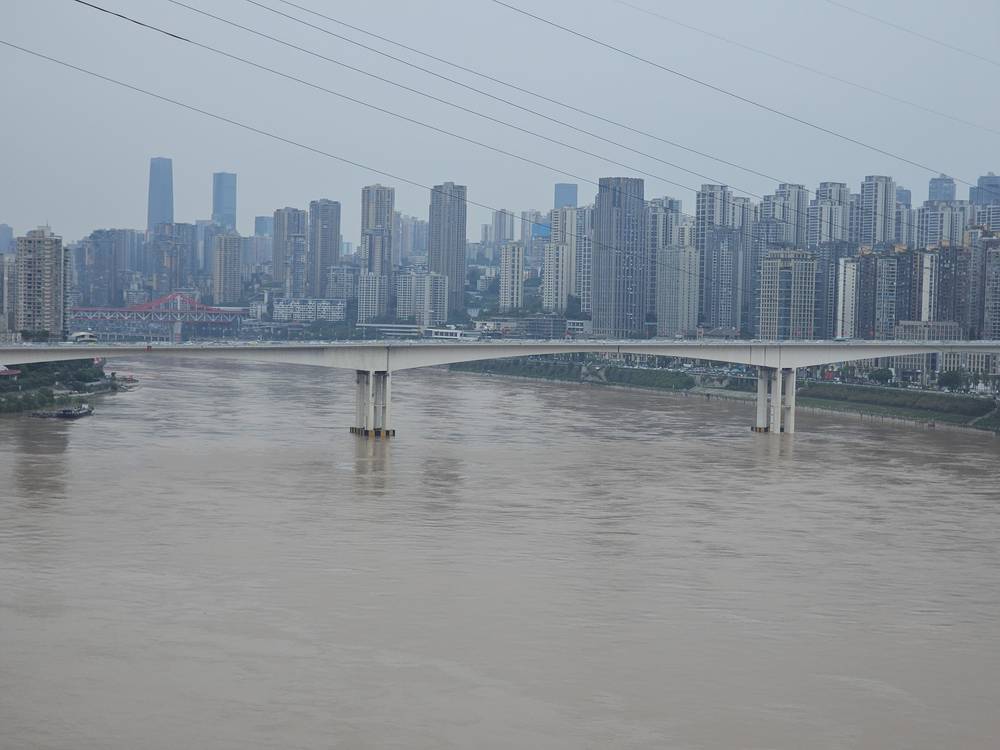
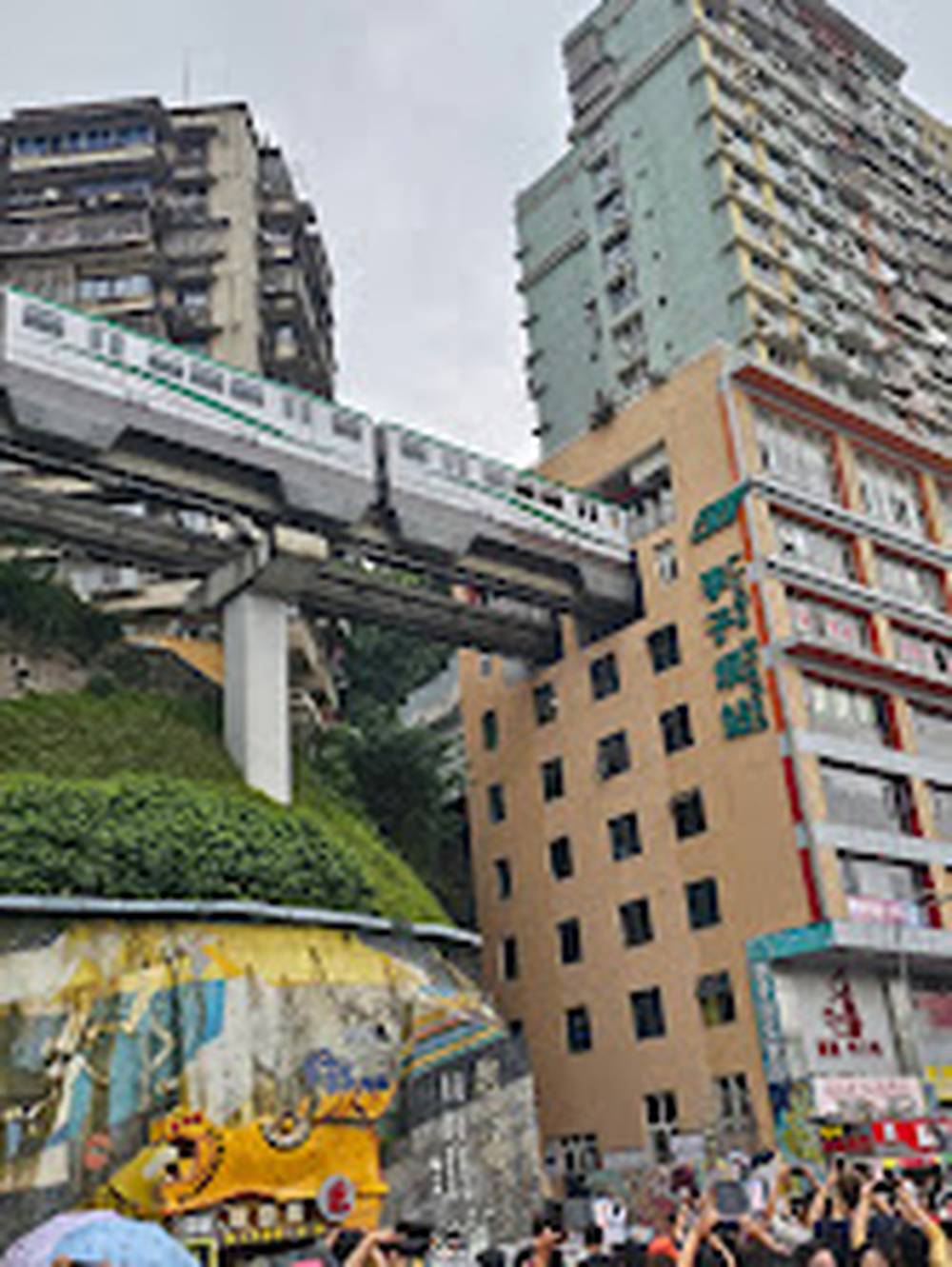
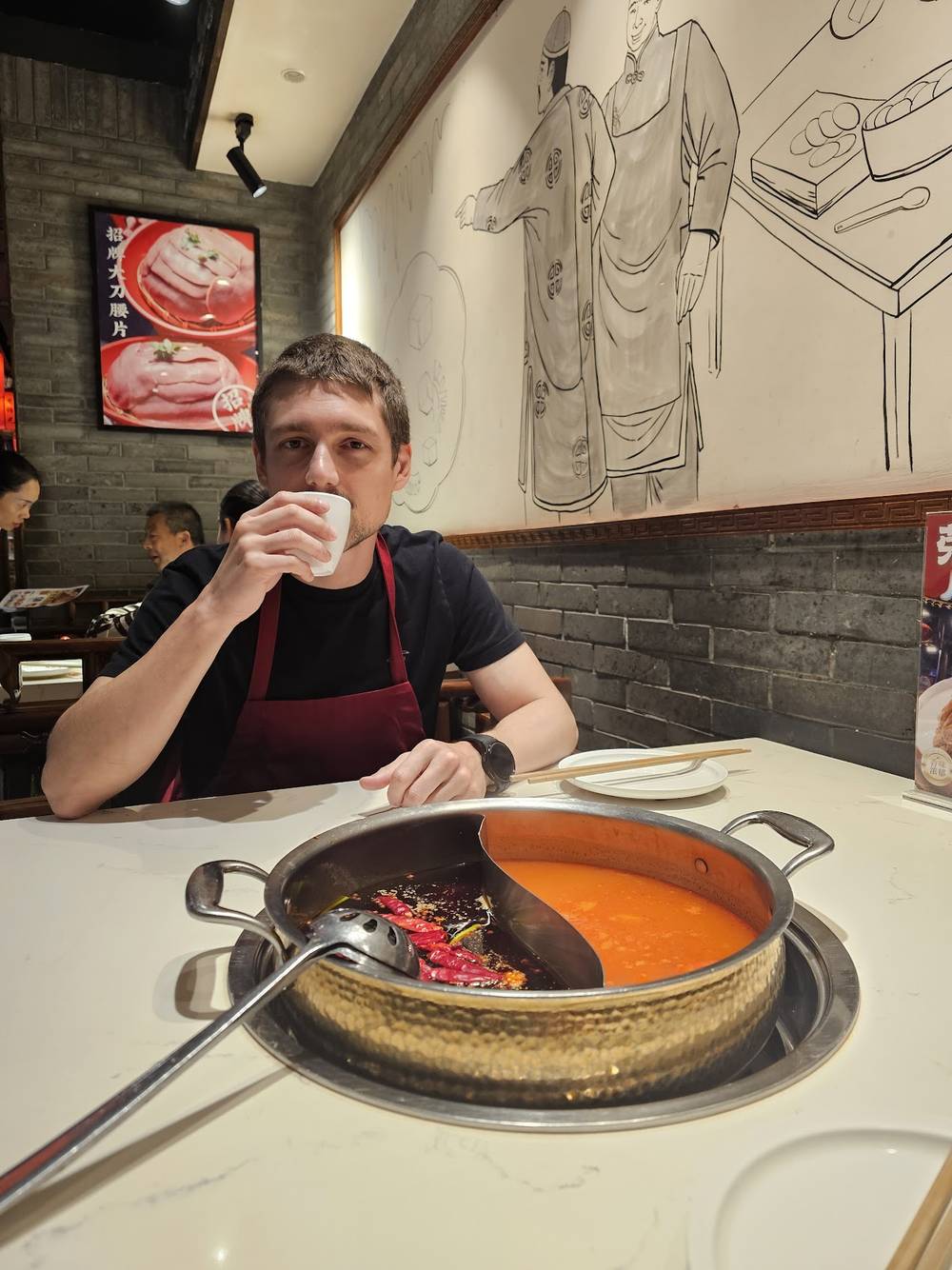
The city is partly in the mountains, so there are many stairs to go down and up, especially if you go down from the mini-centre to Hongya Caves. Near Chongqing you have Ciqikou, where you can go for the day. It's good if you want to see something more traditional, but it's not that worth it, especially if you already went to Yu Gardens or Suzhou in Shanghai.
Also, as a day tour, you can go to where Transformers: Three Natural Bridges (Sanqiaowu) was filmed.
But we didn't go. Near Chongqing you have Chengdu, which everyone says is great, plus the whole panda thing. But we didn't go either! Time is limited, unfortunately.
Chongqing ended up being too high up on the trip. It is very cheap to stay in a hotel on a high floor, with good amenities, and the city offers everything: to spend, to save, to walk, to shop, to take photos, to walk and enjoy.
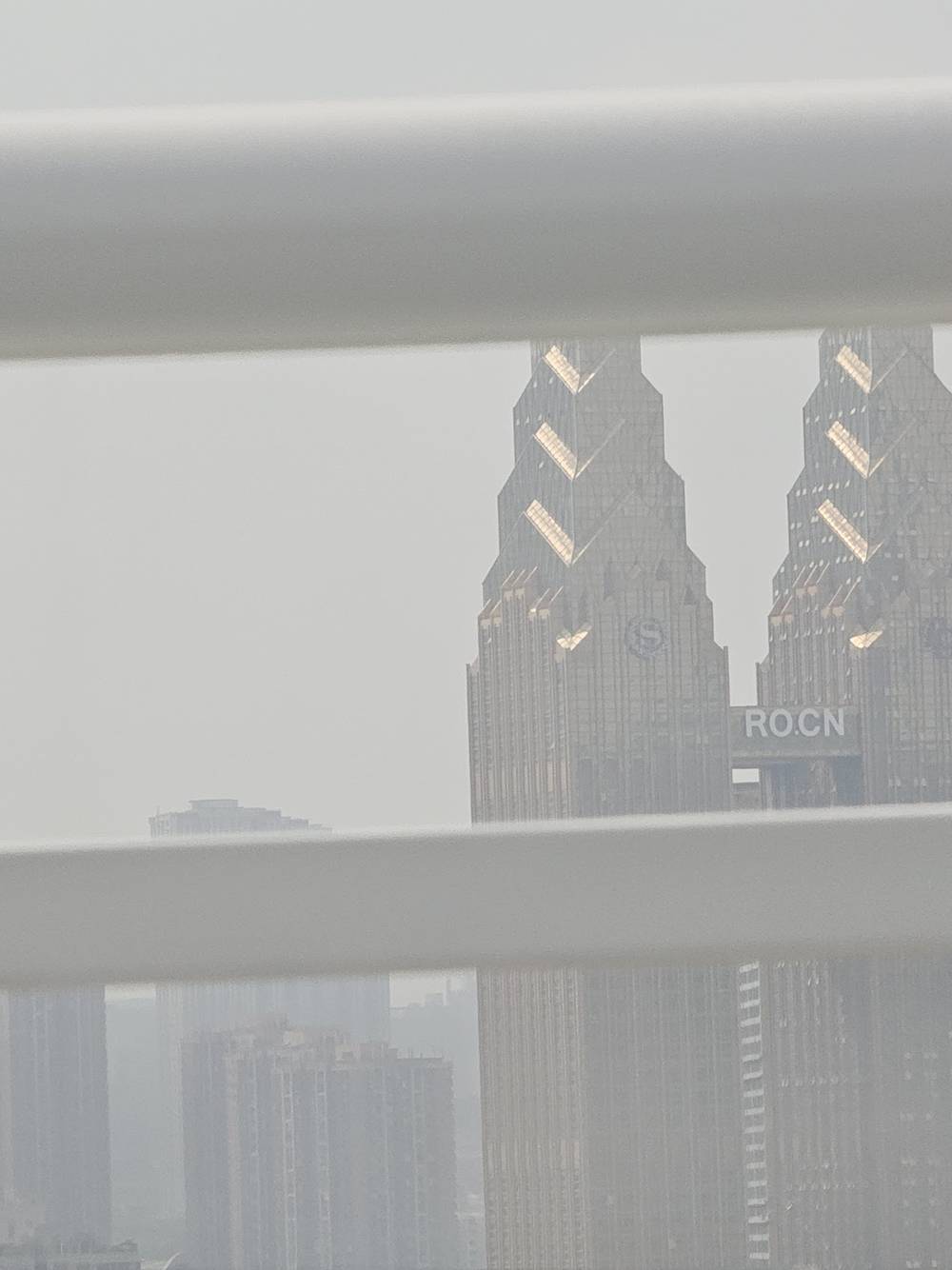
Going to the airport we saw very strange buildings; It's a whole world. Every time I took a stretch by car I was surprised: there are hours of driving and buildings everywhere. Really, the scale of cities is an impressive thing.
Double Chrysler Building, Golden Sheraton, in the middle of the outskirts of Chongqing:
?????
GEN Z Summary:
Viral city, and rightly so:
*cheap hotels
- absurd views
- cyberpunk lights
- spicy food
Guangzhou
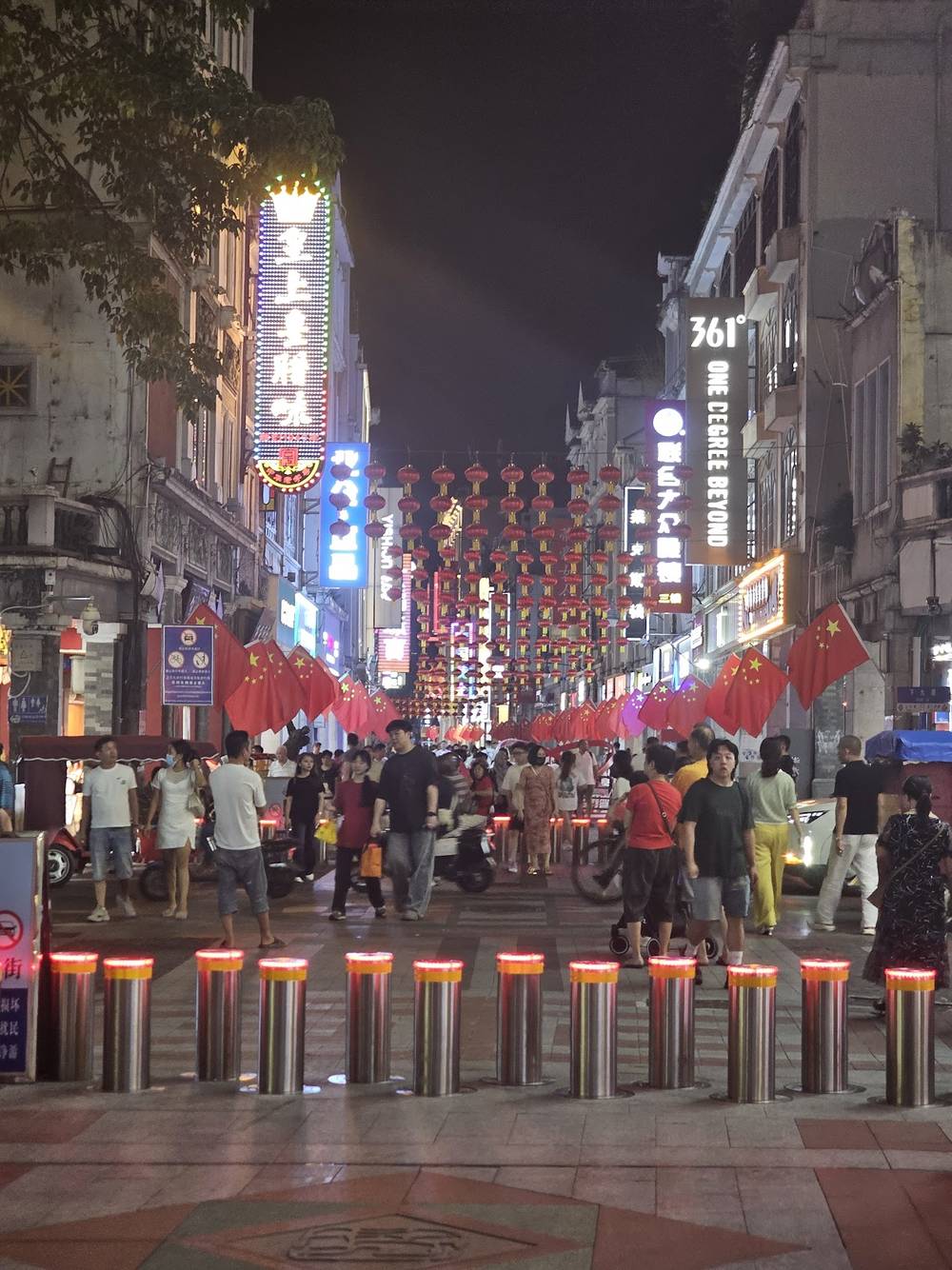
The next destination was Guangzhou, and I don't have much to say about the city since we didn't do much. We arrived at night and were caught in tremendous traffic. That same night we walked along a very rustic and native pedestrian street, behind our hotel, and the next day the idea was to go buy imitations of handbags at Leather City, a shopping center full of vendors who have imitations of the most famous handbags (handbags, in Spain): Prada, Gucci, Hermès, LV, etc.
It's really a world. You go into a place and, if they don't have what you want, they take you to another. Sometimes they take you through passages to another building, you go up 20 floors, you get into a protected place and, inside, thousands of perfectly imitated purses. Wallets that normally cost 6,000–7,000 euros in their store, here you buy them for 200 euros (if you don't haggle). YouTube is full of videos about the subject, not so much about the place itself, because they don't let you take photos or film.
After that we went to other mega shopping malls for imitations or bulk purchases. But the truth is that it didn't catch my attention that much. There's everything: essentially everything you see on AliExpress condensed into one building. The best thing I saw were some stores that sold ceramics and native things, like Chinese teapots, glasses and so on, at a very good price, but there was no longer any space.
We ate where we could, at a really Chinese fast food place (fast food is noodles or rice), and it wasn't bad. I think it was around $4 for two.
Then we entered another mega shopping mall for electronic things: all Chinese, all wholesale. Imitation and real iPhones, chargers, laptops, hair dryers, televisions, vacuum cleaners... whatever you can think of, for children and adults.
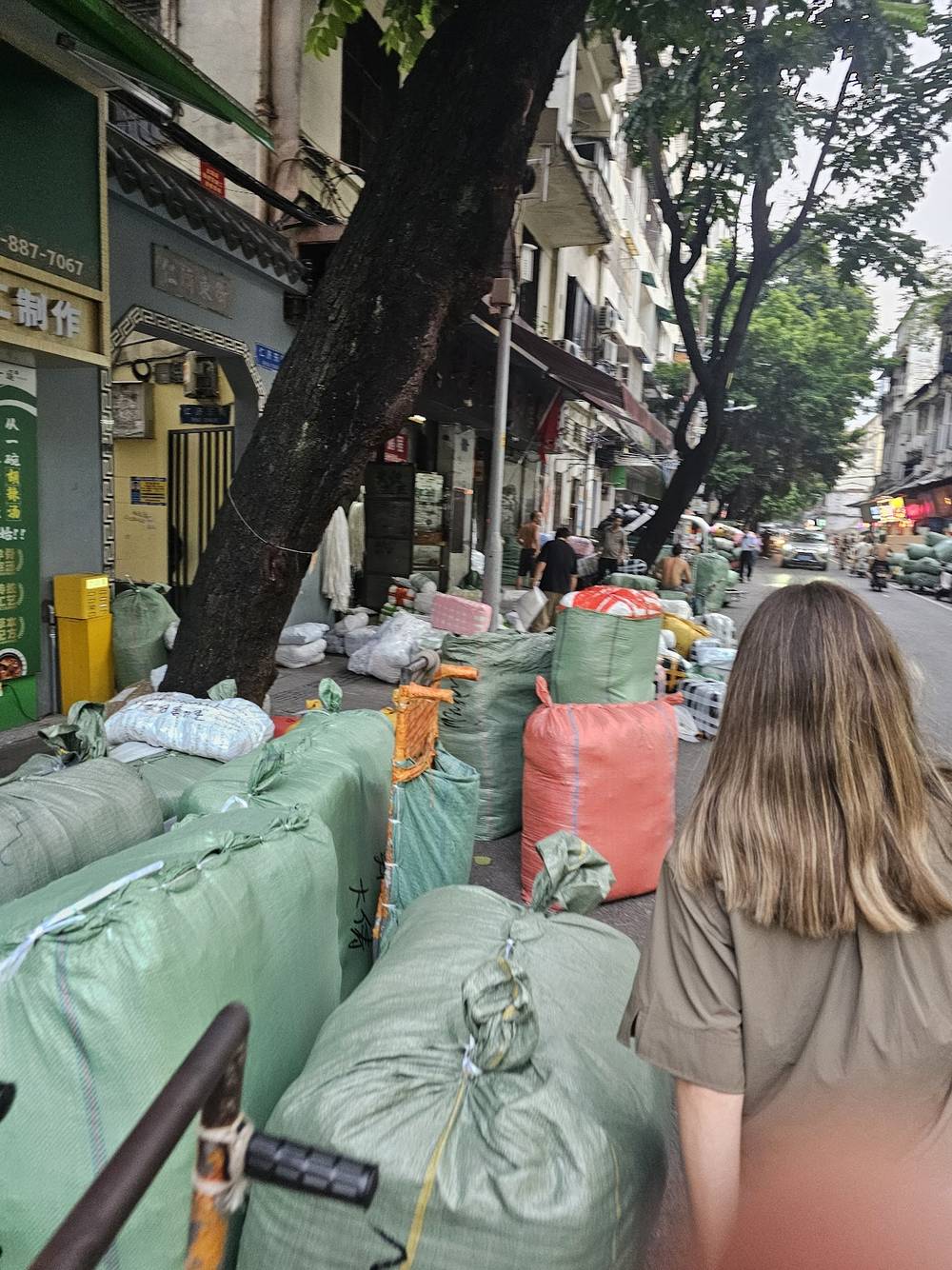
It was already night, we returned to the hotel and near the hotel it was full of places that sell or put together packages. There weren't many food places that we fancied; They were all too local, a lot of sweet and sour fish and weirder things. We went to a mall that was nearby and ended the day at KFC.
I love Chinese food, but:
- after a while you get tired
- What we eat in the West as “Chinese food” has nothing to do with what is in the stalls that sell in China.
The next day, after two nights and a very short day in Guangzhou, we went to the train station. We would take the train to our last destination: Hong Kong.
Hong Kong
The train to Hong Kong is interesting; We had taken trains before. The lines start to form about 10–15 minutes before departure, more or less. Foreigners have to queue (in 2025, it may change) together with the elderly, for the priority line. This is because yes or no someone has to serve you: you cannot go alone through the normal line, since they ask for a Chinese residence card, which you obviously do not have. Since there are so few foreigners, they send you through the senior row and someone scans your passport manually.
The train, normal, perfect. Guangzhou station, spectacular. When you arrive in Hong Kong, you can notice the difference with China: the HKG police begin to speak to you directly in English, they give you orders in English when they see you as a foreigner.
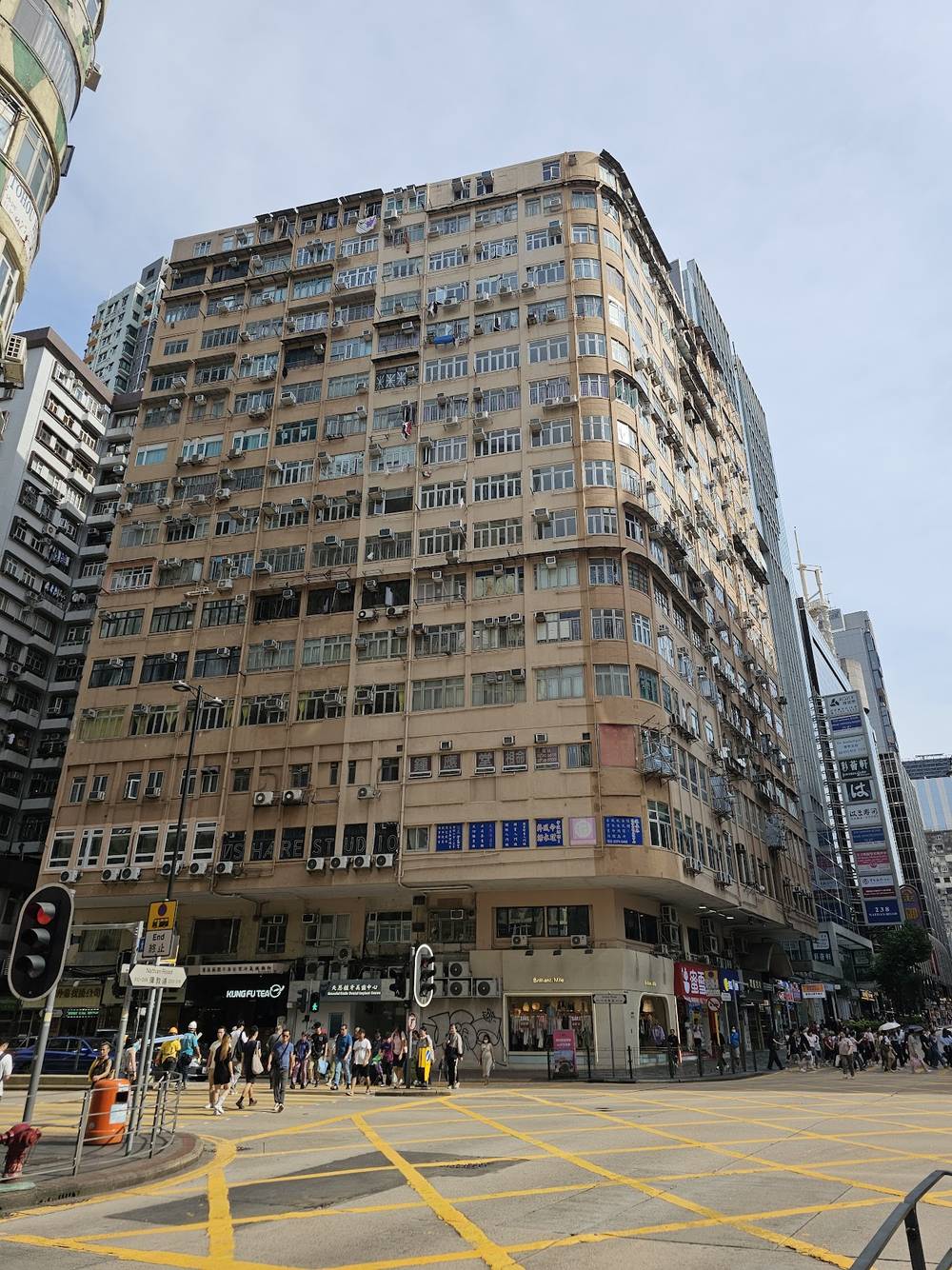
There you arrive with your suitcases and go through customs and immigration. Hong Kong and China are a whole separate topic, but you can investigate on your own if you don't know why there are migrations to enter Hong Kong from China; It's super interesting, I recommend it.
Anyway, everything was perfect, although they asked us many things about our trip. Anyway, calm down.
Hong Kong: four nights. It's worth it, but we had too many people for Golden Week. Although Golden Week is something typical of China, many go to Hong Kong for these festivities and the number of people there was absolutely massive. Hong Kong's most common tourist attractions were exploited.
The city is very rustic. Although the metro runs perfectly, everything feels a little old, although it has its charm. I, personally, liked it a lot; I would go again. My girlfriend didn't like it that much. It's true that there were too many people and sometimes it was difficult to even get a place to have lunch. Look, we had lunch very late, like three in the afternoon, and everything was still full.
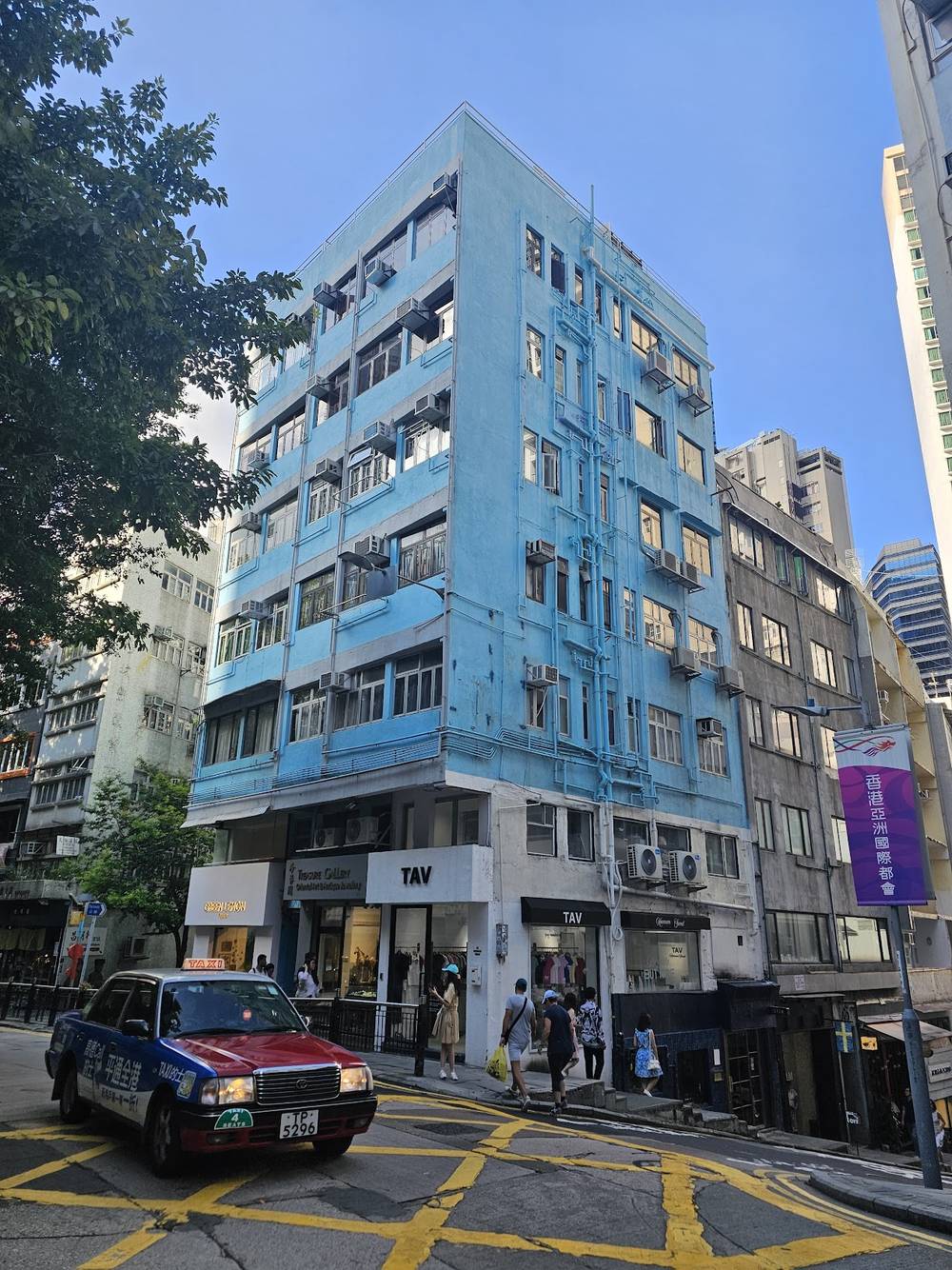
In Hong Kong there is also a lot of money, so there are luxury shopping malls: you have all the best brands and a tremendous skyline to see from the Avenue of Stars, with the expensive mall behind. There is a much more diverse population: in China they are all Chinese; Here, in addition to Chinese, there were many people from all over—Filipinos, more Muslim people, Thais—more varied tourism in general.
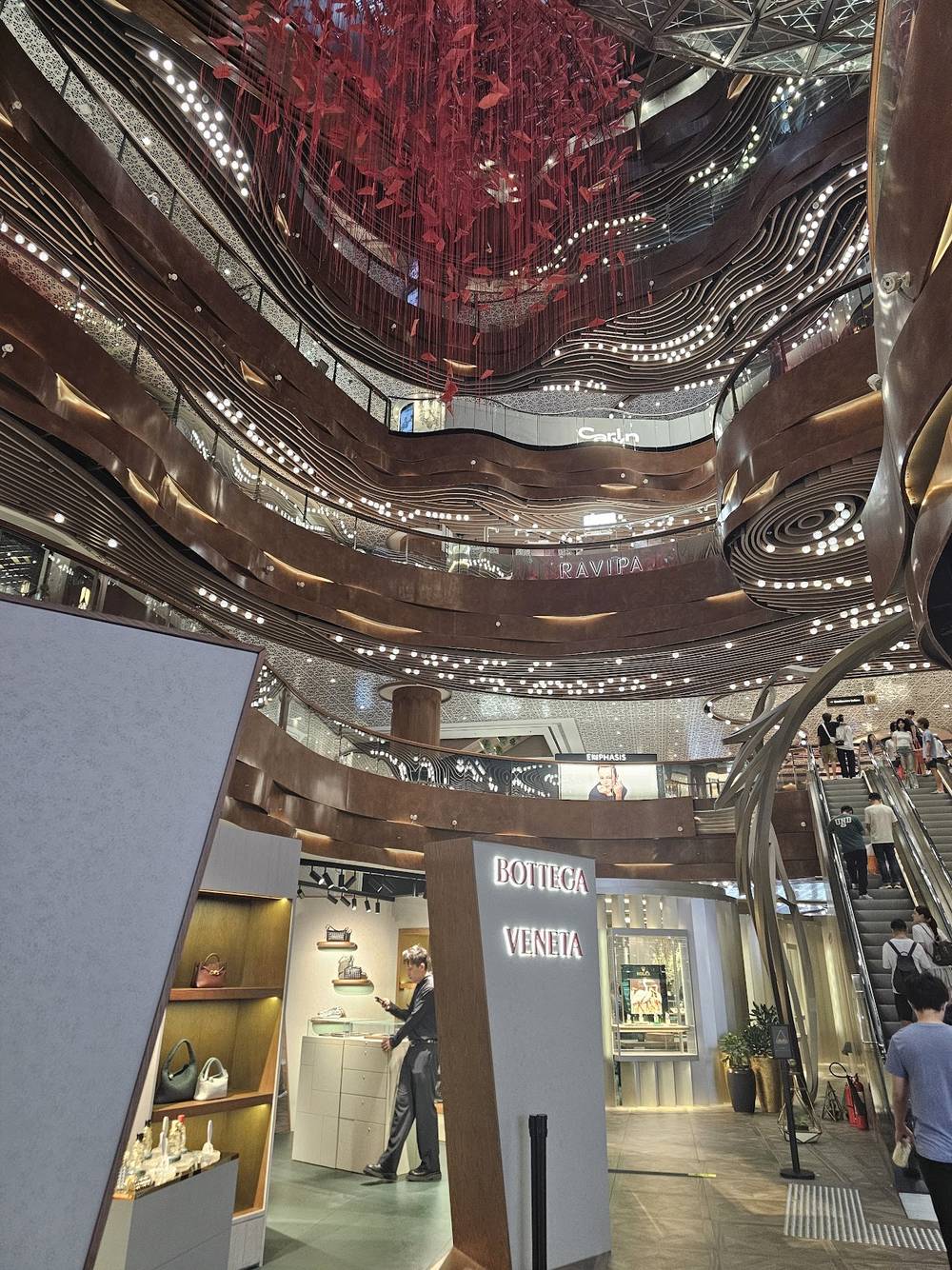
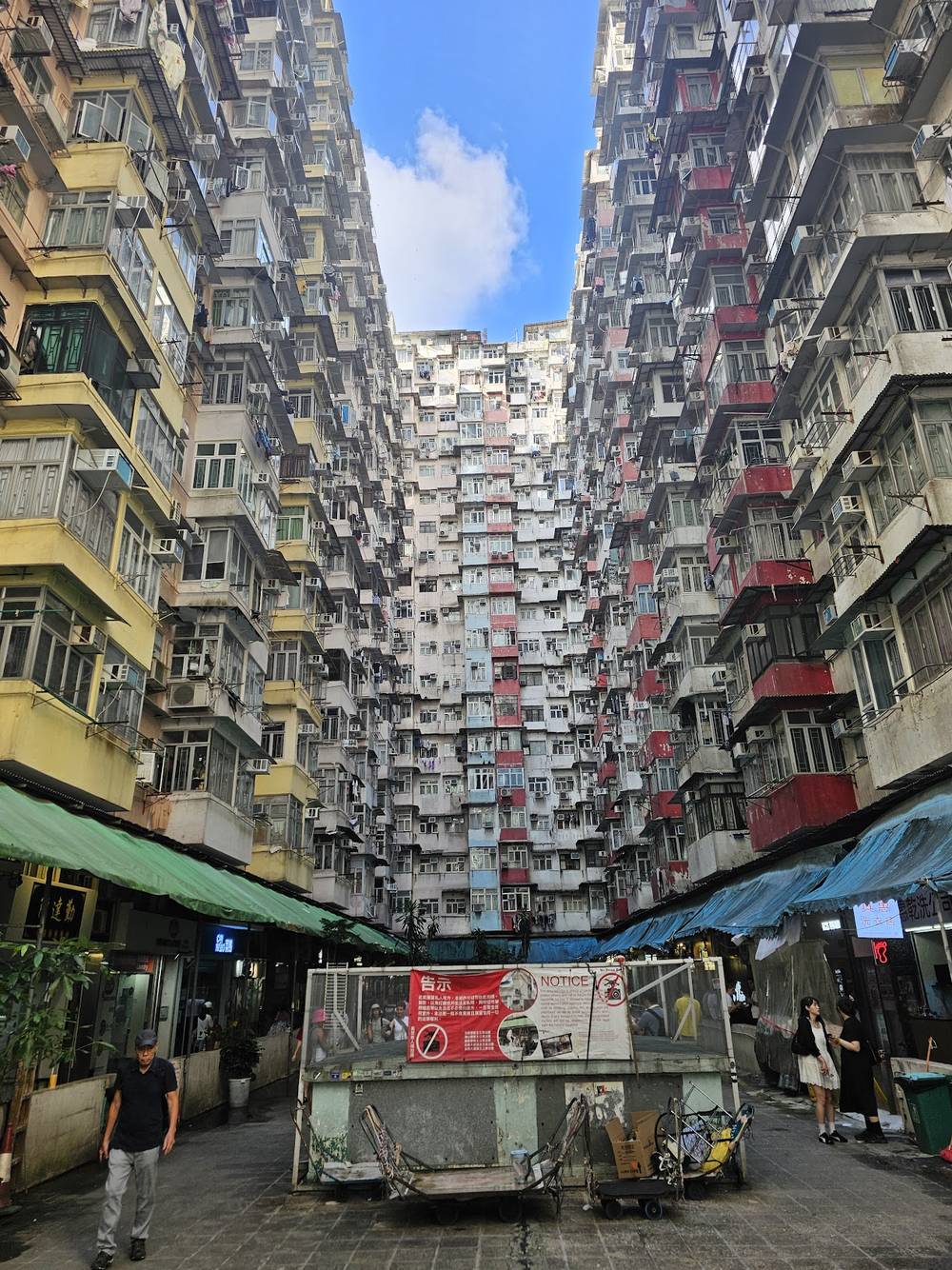
Hong Kong is very expensive, with little space. Hotels are much more expensive, living in Hong Kong is very expensive and they have a tremendous housing crisis.
We saw very strange phenomena. We had a holiday and one square was full, but when I say full I mean that we saw at least a thousand people: women, they looked like Filipinos. Then I found out and yes... they slept on cardboard, but looking clean, well dressed, listening to some music, drinking Coca-Cola, eating, dancing, singing, chatting. Apparently they are domestic workers for people with a lot of money, who gather in parks on holidays because, since they live with their employers, they have nowhere to go on those few days off, and they gather in specific parks. Very crazy. The world is full of these kinds of things, and it exasperates me that I don't know everything, haha.
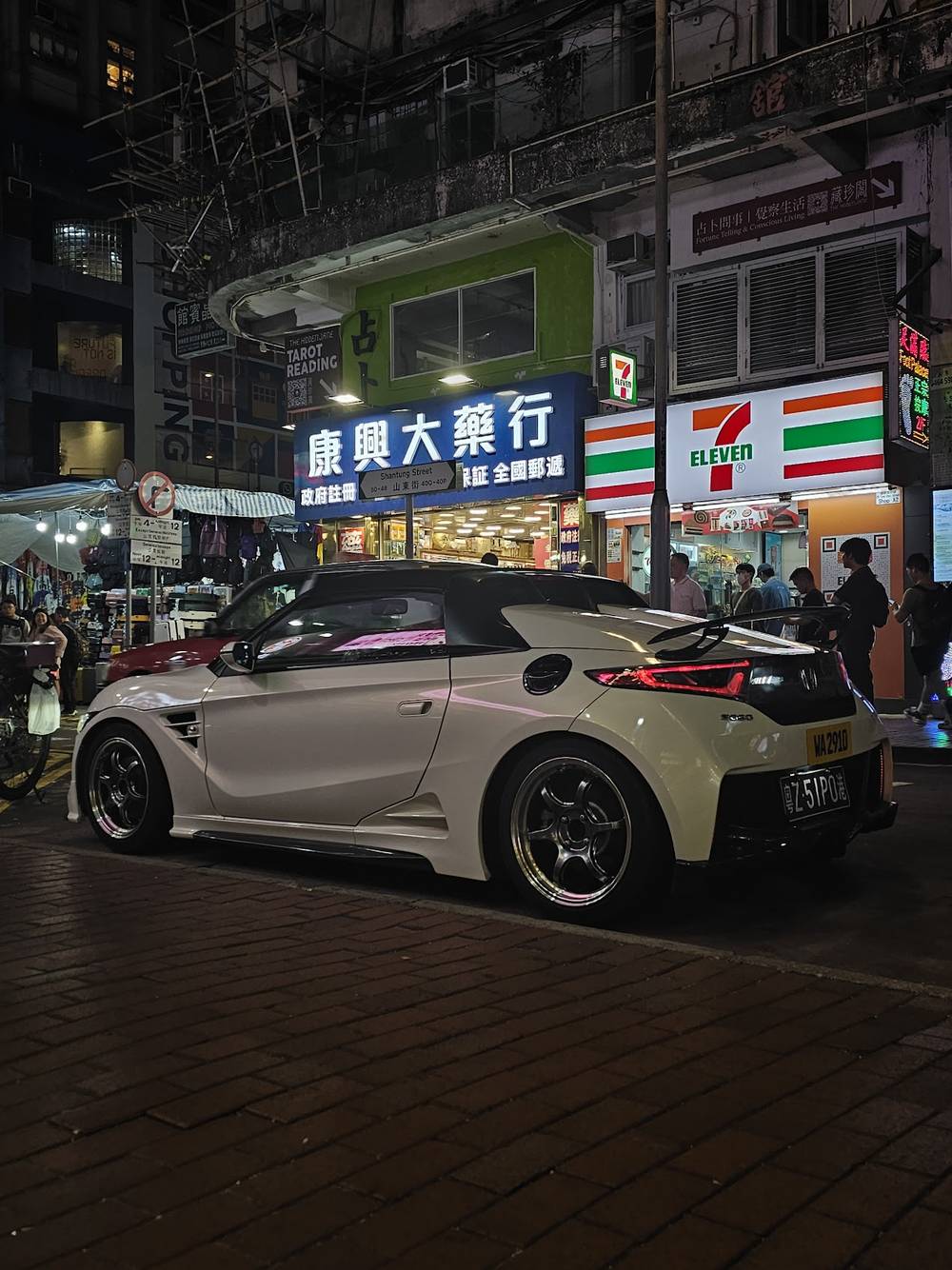
But back to the city: it's an eighties city that, unfortunately, is slowly losing its old neon signs, but the vibe remains (if you played Sleeping Dogs, you probably know what I'm talking about). Its pastel-colored buildings, its signs in traditional Chinese (different from simplified Mandarin), its mix of cultures with the predominance of Cantonese, the number of people, its metro network... there is too much to do.
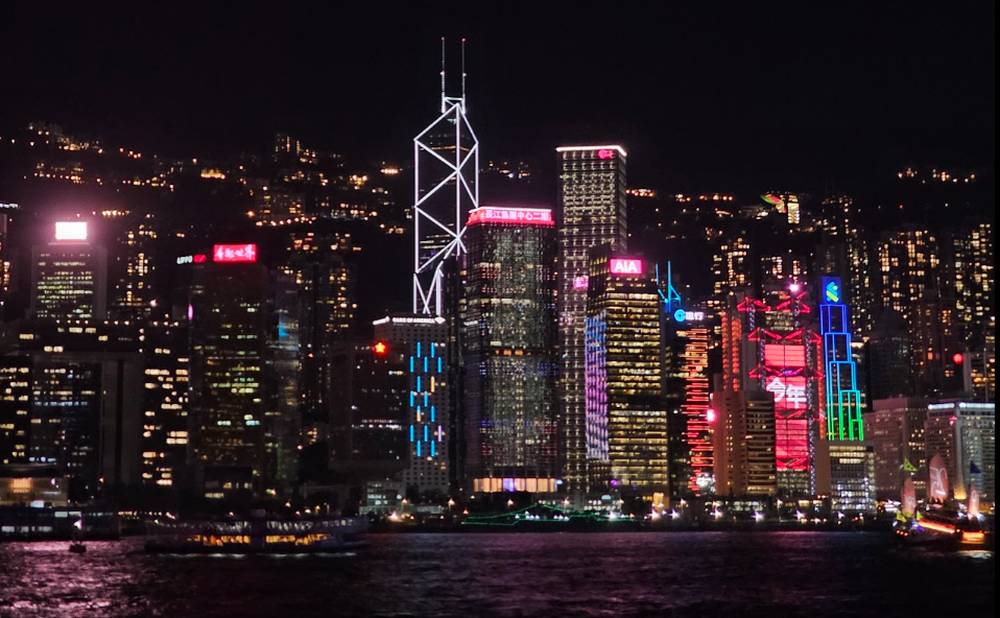
Its geography is very crazy. I felt like I was in a Chinese Rio de Janeiro: there are jungle mountains, humid weather and watch out for the rain.
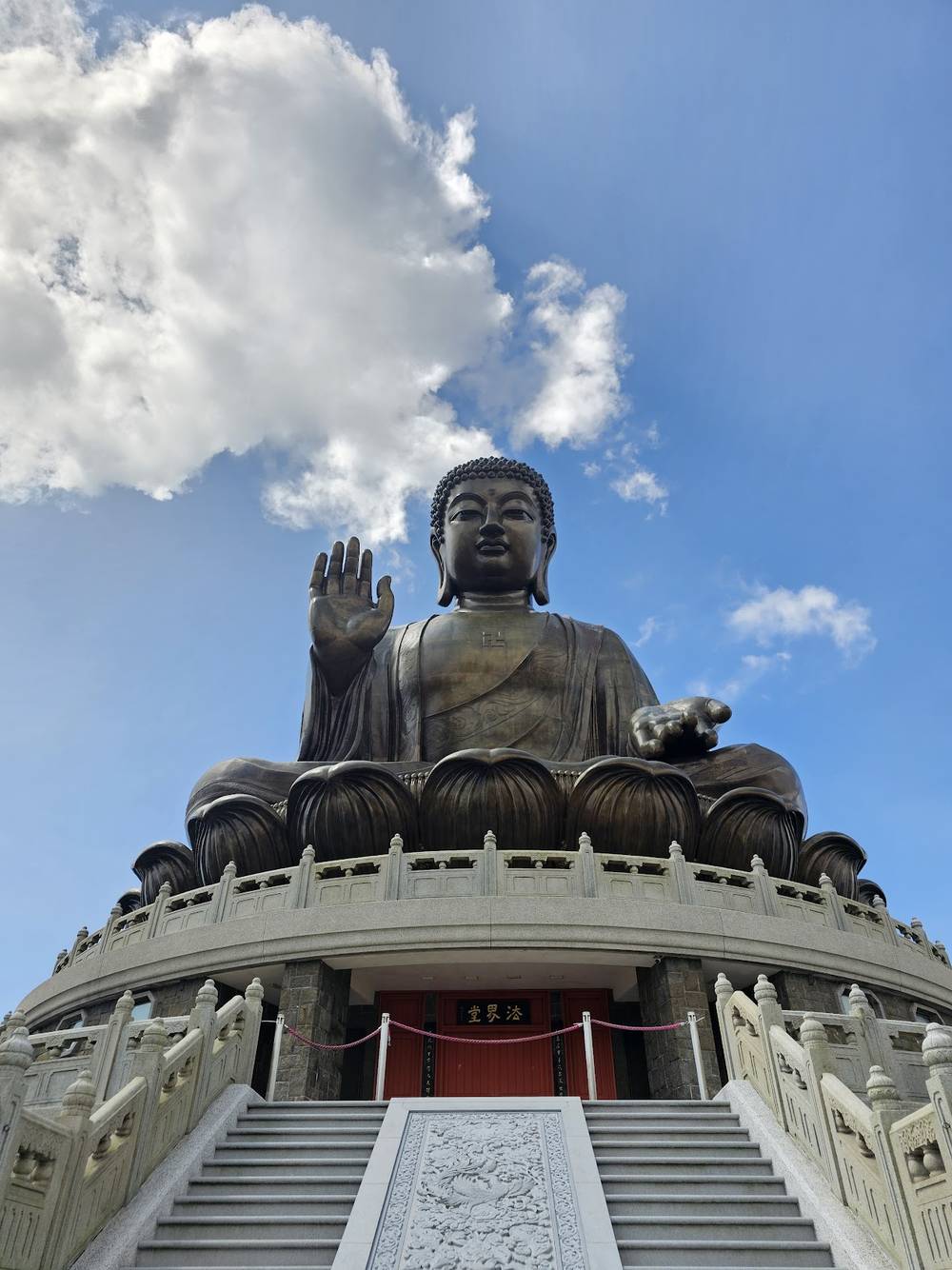
In addition to the usual tourist attractions that are recommended—such as going to Victoria Peak, the Monster Building or the Upper Lascar Street Market—if you go with time, I definitely recommend the Tian Tian Buddha. The view you have from the cable car is tremendous; You see everything, including the longest bridge in the world, from HKG to Macau.
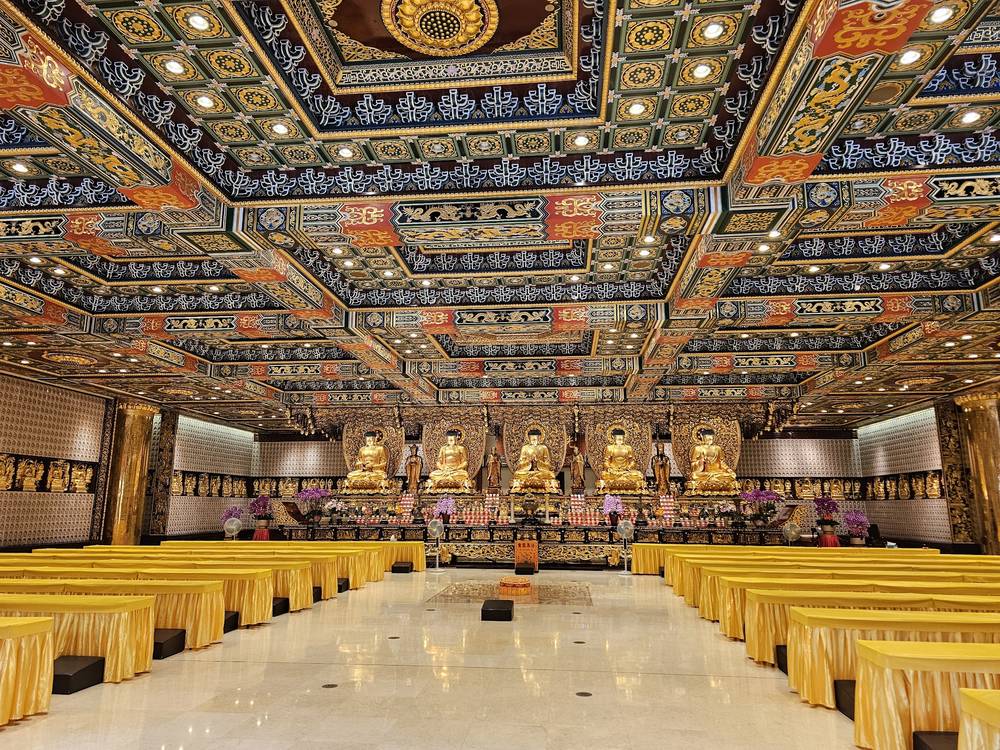
If you plan ahead, a beautiful experience is to go to the Tsz Shan Monastery, where there is a giant statue of Guanyin, as well as a spectacular museum of Buddhism.
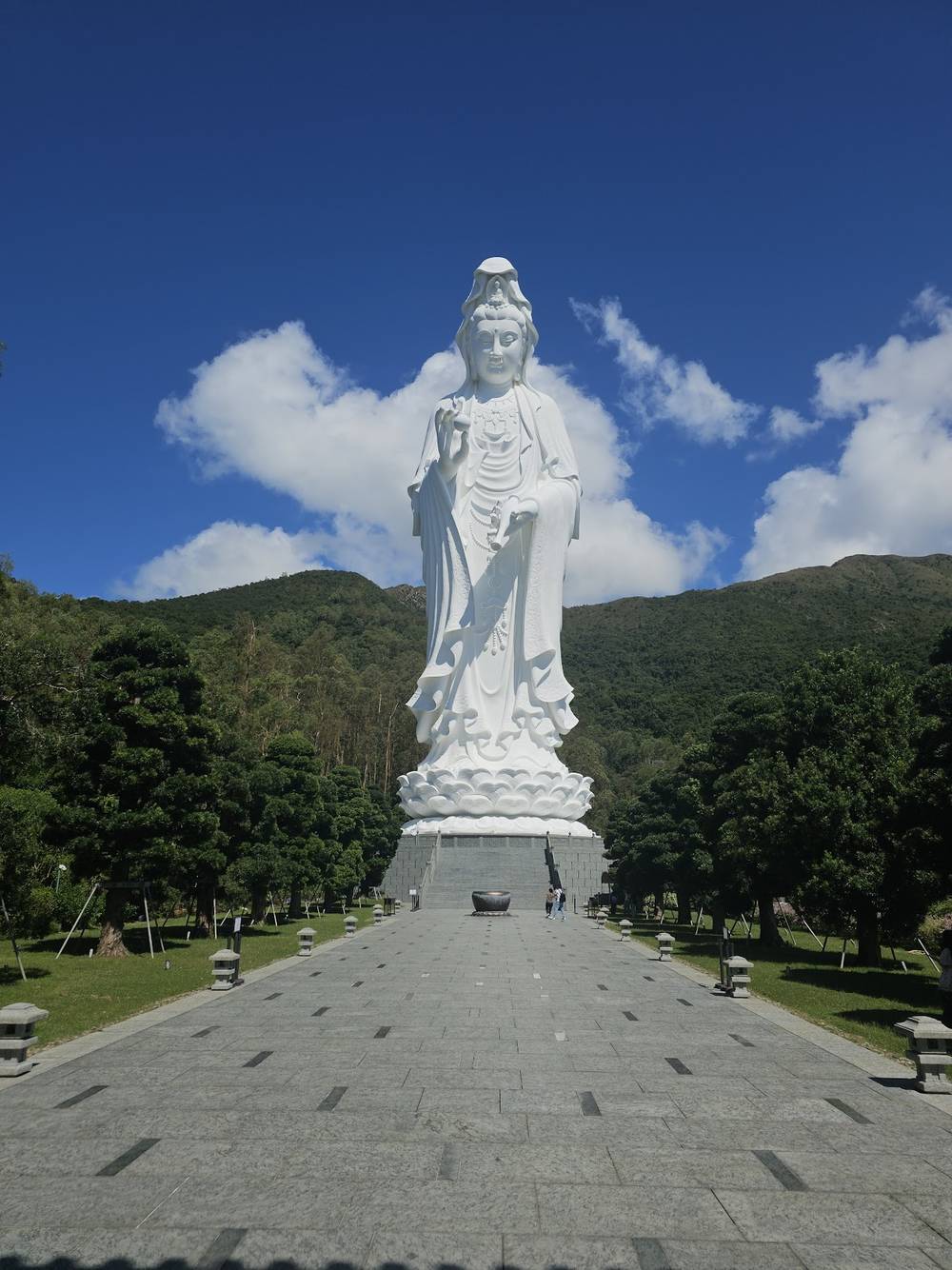
The train trip is good because you get to know the outskirts of Hong Kong a little, where everything is calmer.
If I were to go again, I would definitely go off season. But it's worth going.
End
The day arrived, return to Barcelona. Very hard, although you want to return to your house after 20 days of travel, the feeling is always a little distressing, we had such a good time. I thought it was going to be a much more complex trip, the language, the food, the directions and not getting lost. But on the contrary, it's okay that I spent days researching, but everything turned out PERFECTLY.
Cheap, beautiful, rich, diverse, exotic and fun.
I could write a thousand pages about each of the experiences I lived here, but I think the important thing is to convey the sensations because there are many guides.
I recommend it, without a doubt, China and Japan are two of my favorite destinations in the world. Top 3.
Below is a breakdown of my tips, compiled from an analysis of my experience conducted by ChatGPT.
Real tips for traveling to China (taken from my experience)
This is not a generic guide. They are practical tips, tested on the street, based on what yes or yes happened to me traveling through China as a Western tourist in 2025.
Payments and money (CRITICAL)
-
China is practically cashless
- They do not use international credit cards on a daily basis.
- Everything is paid for with apps.
-
Install and configure Alipay before traveling
- It's easier than WeChat for tourists.
- You can link international cards.
- Works almost everywhere: taxis, supermarkets, 7/11, restaurants, entrances.
-
I have some cash, but not much
- Cash is rarely used, but it serves as a backup.
- Take out small bills (200–400 yuan).
- Large bills (500) are difficult to change.
Internet, apps and digital survival
-
Without VPN you do not exist
- WhatsApp, Instagram, Google, Google Maps, ChatGPT → blocked.
- Install and test the VPN before entering China.
-
Indispensable apps
- Alipay → payments + mini apps
- WeChat → payments, reservations, scan menus
- Didi → Chinese Uber
- Amap (Gaode Maps) → better than Google Maps in China
- Apple Maps → surprisingly usable
- Offline translator (Google or similar)
-
eSIM > physical SIM
- You avoid procedures, it works from the moment you land.
- Choose one that has good support in China.
Phone and battery (non-negotiable)
-
The phone is EVERYTHING
- Map, payments, translation, transportation, reservations.
- If you run out of battery, you are unusable.
-
Buy a powerbank in China
- It must have a CCC seal (mandatory).
- If not, they will confiscate it on internal flights.
- Xiaomi and official brands → safe.
-
Use it every day
- Camera + maps + payments drain battery very quickly.
What to always carry with you
-
Fanny pack (yes, even if you don't like it)
- In summer things don't fit in your pockets.
- You need to bring:
- telephone
- passport
- power bank
- wallet
- wet wipes
-
Passport ALWAYS
- They ask you to:
- tourist attractions
- trains
- tickets
- A photo is not enough.
Transportation
-
Didi is the Chinese Uber
- In airports and stations there are specific areas: E-Hailing.
- Do not accept taxis “outside”.
- Everything by app.
-
Taxis are very cheap
- 1 hour by car ≈ 15 USD.
- Ideal for moving without thinking too much.
Trains (very important)
-
There is no physical ticket
- The ticket is associated with your passport.
-
Special line for foreigners
- You go through the same row as:
- elderly
- people with priority
- Because the automatic system only accepts Chinese resident cards.
-
Arrive in time
- Lines form 10–15 min before.
- The stations are huge.
-
Buy tickets in advance
- Especially Beijing–Shanghai and popular routes.
Attractions and reservations
-
Book early
- Beijing sells out fast (Tiananmen, Forbidden City).
- In other cities not so much.
-
Tiananmen Square
- Only by reservation through WeChat.
- Arrive at least 30 minutes before.
- The earlier, the better.
-
Forbidden City
- Trip.com works perfectly.
- Passport and that's it.
-
Chinese Wall
- Mutianyu is ideal.
- Busda-type tours include everything and simplify a lot.
Food (real expectations)
-
Real Chinese food is NOT Western food
- Nothing to do with what we eat outside of China.
- Even the “basics” taste different.
-
Eating breakfast is difficult
- They have breakfast:
- noodles
- rice
- soups
- Practical solution:
- 7/11
- cookies
- coffee
- western snacks
-
The food is VERY cheap
- Eating for 2–4 USD is normal.
- Even in big cities.
-
After many days, it gets tiring
- It is normal to cut back on Western fast food from time to time.
Hygiene and bathrooms (total realism)
-
Squat baths (Turkish style)
- Very common.
- Not everyone has a western toilet.
-
There is almost never paper
- Always carry.
-
Bring wet wipes
- For various hands and situations.
Culture and cultural clashes
-
Spit
- Very many.
- It's normal there.
-
Smoking
- On the street, bathrooms, stations.
- Even indoors sometimes.
-
Transit
- Priority:
- cars
- motorcycles
- pedestrians
- Always look even if you have a traffic light.
- Priority:
Security
-
China is ultra safe
- It is very difficult to get scammed if you use official apps.
- Lots of surveillance, cameras, order.
-
The biggest risk is technological
- run out of battery
- not have VPN
- not knowing how to use the apps
General planning
-
China is tiring
- Huge distances.
- A lot of movement.
- Plan breaks.
-
But it's worth it every day
- Every journey surprises.
- Each city is a world.
-
Off-season is better
- Avoid Golden Week if you can.
- Less people, more enjoyment.
Final advice
If you know how to investigate, you adapt to technology
and you accept that not everything works like in the West,
China is one of the best trips you can take in your life.
Original article in Spanish: China 2025 me cambio la vida